Inheritance Law

Someone has died and there is property, a bank account or a debt in Turkey. The heirs usually need the same things: to find out who the heirs are, what the estate consists of, whether to accept or disclaim it, and how to transfer the assets. When one of the heirs lives abroad, or the deceased was not a Turkish citizen, each of these steps takes a few more documents and a few more decisions.
Scope of work
Certificate of inheritance (mirasçılık belgesi). The document showing who the heirs are and their shares. It is issued by a notary or by the civil court of peace (sulh hukuk mahkemesi). Where there is a foreign element, it is usually obtained from the court.
Disclaimer of inheritance (mirasın reddi). An heir can refuse an estate, for example when its debts exceed its assets. The deadline is three months (Turkish Civil Code, art. 606). If the estate was clearly insolvent at the date of death, the inheritance is deemed disclaimed (art. 605/2), and this can be established by a court later.
Transfer of title deeds and bank assets. Registering inherited property in the heirs' names at the land registry and releasing bank accounts, once the inheritance tax return has been filed.
Inheritance tax return. The filing period depends on whether the death occurred in Turkey or abroad, and where the heirs live.
Division of the estate (ortaklığın giderilmesi). If the heirs cannot agree, the court orders the property divided or, if that is not possible, sold. Mediation must be tried first.
Forced heirship claims (tenkis). A will or a lifetime gift cannot reduce certain close relatives below their reserved share (saklı pay). An heir whose share was infringed can bring a reduction claim.
Sham transfers (muris muvazaası). Where the deceased registered a "sale" at the land registry that was in fact a gift, to keep the property away from other heirs.
Wills. Drafting a will that holds up under Turkish law, and assessing what effect a will made abroad has in Turkey.
Which law applies when the deceased was a foreign national?
Under the Turkish Private International Law Act (MÖHUK, art. 20), inheritance is governed by the national law of the deceased, with one important exception: immovable property in Turkey is always subject to Turkish law. A German citizen's estate may therefore be split. The flat in Antalya passes under Turkish rules, the rest under German law. This affects who inherits, in what shares, and whether a will made abroad can set aside Turkish reserved shares for the Turkish property.
Can this be done without coming to Turkey?
In most cases, yes. You can give a power of attorney at a Turkish consulate, or before a notary in your country with an apostille and a sworn translation. The power of attorney has to name the specific acts. A disclaimer of inheritance, for example, cannot be made on the basis of a general power of attorney.
How a file usually runs
The family situation and what is known about the estate are reviewed. The required documents are identified, along with any deadline that is already running.
The certificate of inheritance is obtained, and land registry records and, where possible, bank records are searched.
The decision to accept or disclaim, and whether a tax return has to be filed, is made together with the client.
The assets are transferred, divided or sold. If the heirs disagree, the matter goes to court.
Frequently asked questions
How long do I have to disclaim an inheritance in Turkey?
Three months. For legal heirs, the period runs from the date they learned of the death, or from a later date if they can show they only learned then that they were heirs. For heirs appointed by will, it runs from official notification of the will.
Can a foreigner inherit property in Turkey?
Yes. Foreign nationals can inherit immovable property in Turkey. The restrictions on foreigners acquiring property, such as military zones, only come into play in exceptional cases.
Do the heirs inherit the debts?
Yes, unless they disclaim the inheritance. This is why the estate's debts should be checked before the three-month period ends.
What if the heirs cannot agree?
Mediation comes first. If that fails, a case for the division of co-owned property is filed, and the court orders the property divided or sold, with the proceeds distributed according to the shares.
Get in touch
Do you have a specific matter?
You can describe your situation and send any documents via WhatsApp. This works the same way if you are writing from abroad.
Monday–Friday, 09:00–18:00 (Turkey time)
Learn & Stay Informed
Insights
Sep 24, 2026
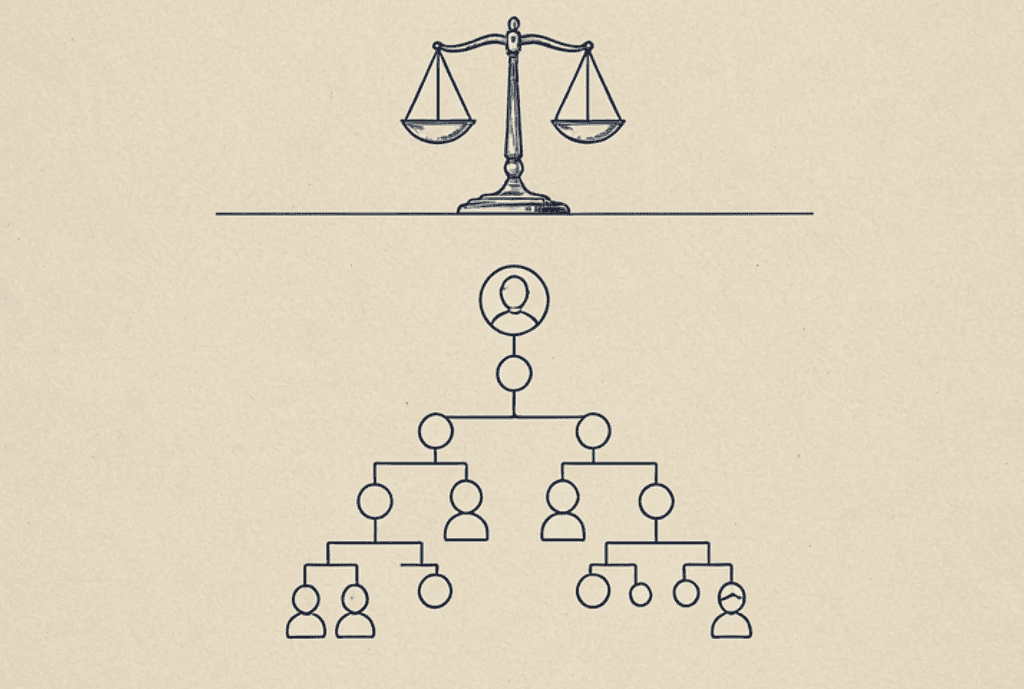
The Parentela System: Statutory Heirs and Inheritance Shares under Turkish Law
How the Turkish Civil Code (Arts. 495–501) determines statutory heirs and their shares: the parentela system, representation, the surviving spouse, adopted children and the State, with a family-tree diagram for every scenario and Court of Cassation case law.

Sep 21, 2026
Deemed Renunciation of Inheritance in Turkey | Article 605 TMK
Does an insolvent estate automatically protect heirs in Turkey? We examine the conditions for deemed renunciation of inheritance under Article 605/2 of the Turkish Civil Code, the burden of proof, and the relevant Court of Cassation rulings.

Sep 16, 2026
What Law Applies to Your Inheritance in Turkey? Forced Heirship for Foreign Nationals
If you own property in Turkey, or stand to inherit from a Turkish national, you may be wondering which country's inheritance law actually applies. Here's what Turkish private international law and the forced heirship rules say.