Inheritance Law
A Foreign National Died Owning Assets in Turkey: Next Steps
A foreign national died owning real estate or assets in Turkey? This guide covers the full legal process — certificate of inheritance, tax obligations, title deed transfer, and how to manage everything from abroad.
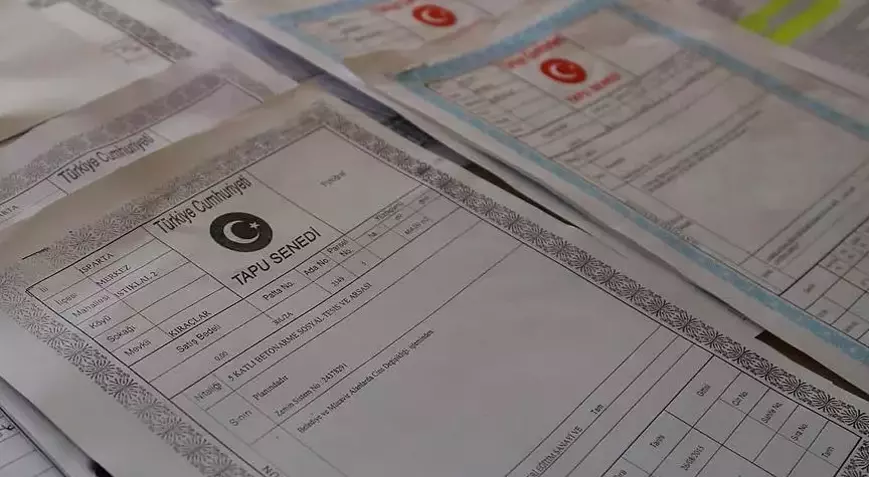
Foreign National Died Owning Property in Turkey: A Legal Guide for Heirs
When a foreign national dies leaving real estate, bank accounts, vehicles, or company shares in Turkey, their heirs face a legal process that runs across two parallel tracks simultaneously: the succession procedure under Turkish private law, and the tax compliance procedure under Turkish tax law. Neither can be completed independently of the other.
The process is further complicated by the need to establish which law governs the succession, validate foreign documents in Turkey, and in most cases, manage the entire procedure remotely through an authorised representative.
This guide sets out each stage in the order it must be addressed.
Step 1: Determine Which Law Governs the Succession
Before any procedural step is taken, the applicable substantive law must be identified. Under MÖHUK Art. 20, Turkish private international law applies the following rules:
Immovable property located in Turkey (real estate, land) → governed by Turkish law, regardless of the deceased's nationality
Movable assets (bank accounts, vehicles, company shares, personal property) → governed by the national law of the deceased at the time of death
This means that in a typical cross-border estate, two different legal systems may govern different categories of assets simultaneously. For Turkish real estate specifically, Turkish succession law applies in full — including forced heirship rules (saklı pay), inheritance shares, and renunciation rights.
Practical consequence: Heirs should not assume that an inheritance procedure completed in their home country automatically resolves the Turkish portion of the estate. A separate Turkish procedure is required for Turkish-sited assets in virtually all cases.
Step 2: Obtaining a Certificate of Inheritance for Turkish Assets
This is the stage where a critical and frequently misunderstood rule applies.
The Core Rule: A Turkish Certificate Is Required for Turkish Immovable Property
Under Turkish law, a foreign certificate of inheritance cannot be used directly to transfer title to immovable property located in Turkey. For taşınmaz tereke — real estate, land, and rights registered in the Turkish land registry — a certificate of inheritance (mirasçılık belgesi or veraset ilamı) issued by a Turkish notary or Turkish civil court of first instance (sulh hukuk mahkemesi) is mandatory.
This is not a procedural preference — it is a substantive legal requirement. The Land Registry (Tapu Müdürlüğü) will not process a title deed transfer on the basis of a foreign-issued succession document alone, regardless of whether that document has been apostilled or translated.
Why Foreign Certificates Cannot Be Used Directly
Turkish courts and authorities assess heirship by reference to the applicable law — which for movable assets may be the deceased's national law, and for immovables is Turkish law. A foreign certificate of inheritance reflects the heirship determination made under a different legal system, potentially under different rules on forced heirship, inheritance shares, and succession capacity. Turkish authorities cannot verify compliance with Turkish law from a foreign document alone.
Accordingly, even where heirs hold a validly issued and apostilled foreign certificate of inheritance, a fresh application to the court is required to establish heirship for the purposes of the Turkish immovable estate.
Procedure Before a Turkish Notary or Court
Heirs may apply to the civil court (sulh hukuk mahkemesi) for a Turkish certificate of inheritance. The applicable court is determined under HMK Art. 382–384: for immovable property, the court of the location where the assets are situated has jurisdiction; for the general succession, the court of the deceased's last domicile in Turkey or, where the deceased was not domiciled in Turkey, the court of the location of the assets applies.
Required documents typically include:
Death certificate (apostilled and certified Turkish translation)
Identity documents of all heirs (apostilled and certified Turkish translation where applicable)
Family relationship documents — birth certificates, marriage certificates (apostilled and certified Turkish translation)
For corporate assets: company registry extracts
The Role of Foreign Succession Documents
Although a foreign certificate of inheritance cannot be used directly for the immovable title transfer, it can serve as supporting evidence in the Turkish court proceedings. It is not ignored — it informs the Turkish authority's assessment of the family structure and heirship claims, particularly for movable assets governed by the deceased's national law.
For movable assets (bank accounts, vehicles, company shares) governed by the deceased's national law under MÖHUK Art. 20, Turkish authorities may in practice, give greater weight to a foreign certificate of inheritance. However, banks and registries will still typically require a Turkish-issued certificate before processing transfers.
Step 3: File the Inheritance Tax Declaration
Whichever succession route applies, all heirs acquiring Turkish-sited assets are required to file a Turkish inheritance tax declaration (veraset ve intikal vergisi beyannamesi) with the competent tax office. The filing deadline depends on two factors: where the death occurred and where the heir is resident at the time of filing.
Where death occurred in Turkey:
Heir's Location | Deadline |
|---|---|
Heir is resident in Turkey | 4 months from date of death |
Heir is resident abroad | 6 months from date of death |
Where death occurred abroad:
Heir's Location | Deadline |
|---|---|
Heir is resident in Turkey | 6 months from date of death |
Heir is resident in the same country where the deceased died | 4 months from date of death |
Heir is resident in a third country (neither Turkey nor the country of death) | 8 months from date of death |
2026 Tax Brackets and Exemption
The exemption threshold for 2026 is TRY 3,000,000 per heir. The following progressive rates apply to the amount exceeding the exemption:
Taxable Base (TRY) | Inheritance Rate |
|---|---|
Up to 3,000,000 | 1% |
Next 7,000,000 | 3% |
Next 15,000,000 | 5% |
Next 30,000,000 | 7% |
Above 55,000,000 | 10% |
Tax may be paid in six equal instalments over three years. Title deed transfer is blocked until the tax obligation has been discharged or formally scheduled.
Step 4: Title Deed Transfer at the Land Registry
Once the Turkish certificate of inheritance is obtained and the inheritance tax position is resolved, the title deed (tapu) can be transferred at the relevant Land Registry Office (Tapu ve Kadastro Müdürlüğü).
Key procedural points:
All heirs must either appear in person or be represented under a notarised and apostilled power of attorney — the Land Registry requires express authorisation for this specific transaction
The Land Registry will verify inheritance tax clearance before processing the transfer
Certified Turkish translations must accompany foreign identity documents
Step 5: Other Asset Categories
Bank Accounts
Turkish banks require the Turkish certificate of inheritance and proof of tax compliance before releasing funds. Foreign identity documents of heirs must be apostilled and accompanied by certified Turkish translations.
Vehicles
Vehicle transfers are processed through the traffic registry (trafik tescil). The same certificate of inheritance and tax clearance requirements apply.
Company Shares
Transfer of shares in a Turkish company requires a shareholders' resolution and amendment to the articles of association, registered with the Trade Registry (Ticaret Sicili Müdürlüğü). Tax clearance must be obtained before the share transfer can be registered.
Managing the Process From Abroad: Power of Attorney
The vast majority of foreign heirs manage Turkish succession proceedings remotely. This requires a power of attorney (vekâletname) authorising a Turkish attorney to act across all stages — tax filing, court proceedings, Land Registry transactions, and bank procedures.
A power of attorney for use in Turkey may be executed through one of two routes:
Option A: Notary in the Heir's Country of Residence
The power of attorney is executed before a local notary in the country where the heir resides. The following requirements must be met for the document to be valid in Turkey:
Apostille: The document must bear an apostille under the Hague Convention. Where Turkey has a bilateral agreement with the relevant country that exempts documents from apostille, this requirement does not apply.
Turkish translation: As the document will have been executed in a foreign language, a Turkish translation must be prepared. This translation must be carried out by a translator recognised by Turkish authorities and subsequently certified by a Turkish notary. Translation and notary certification fees apply at this stage.
Option B: Turkish Consulate in the Heir's Country of Residence
The power of attorney is executed directly at the notarial unit of the Turkish consulate (konsolosluk noterliği), in the presence of a translator. This route offers two practical advantages:
The document is executed in Turkish from the outset — no separate translation or Turkish notary certification is required afterwards.
No apostille is needed, as the document is issued directly by a Turkish official authority.
This route is generally faster and more cost-effective, as it eliminates the post-execution translation and certification steps entirely.
Regardless of which route is used, the power of attorney must contain sufficiently specific authorisation — a generic power of attorney will be rejected by the Land Registry if it does not expressly cover the relevant transactions.
Renouncing a Turkish Inheritance
Foreign heirs may renounce a Turkish inheritance under Turkish Civil Code Art. 605. Renunciation must be made by formal declaration before the competent Turkish civil court within three months of the heir learning of the death and their status as heir.
Renunciation eliminates both the inheritance rights and the associated tax liability retrospectively. Conditional or partial renunciations are not recognised under Turkish law.
Frequently Asked Questions
Can heirs sell the Turkish property before completing the inheritance process?
No. The title deed remains in the deceased's name until the transfer is registered at the Land Registry. The property cannot be sold or mortgaged until heirs are formally registered as owners.
What if one heir is uncooperative or cannot be located?
Other heirs may apply to the Turkish court for judicial supervision of that heir's share. In extreme cases, a partition action (ortaklığın giderilmesi davası) can force a sale of the property and distribution of proceeds.
Is a Turkish will required for a foreign national owning Turkish property?
Not required, but strongly advisable. In the absence of a will, Turkish forced heirship rules determine the inheritance shares. A Turkish will — or a foreign will formally valid and recognisable in Turkey — allows testamentary freedom within the limits of Turkish law and can simplify the succession process considerably.
Our foreign probate is already complete — do we still need a Turkish court procedure?
Yes, for immovable property. A completed foreign probate does not substitute for a Turkish certificate of inheritance as regards Turkish real estate. The Turkish Land Registry will not process a title transfer on the basis of a foreign probate order alone. A fresh application before a Turkish notary or court is required regardless of what has been completed abroad.
Conclusion: Acting Promptly Protects Everyone's Rights
The Turkish succession process for foreign national estates involves strict deadlines, parallel tax and legal procedures, and mandatory formal requirements that cannot be bypassed. The most consequential mistake foreign heirs make is assuming that a completed foreign probate or succession certificate resolves the Turkish portion of the estate — it does not, and acting on this assumption causes significant delays and additional cost.
Who this guide is most relevant for
Heirs of foreign nationals who owned real estate, bank accounts, or business interests in Turkey
Turkish citizens and foreign nationals living abroad managing the process remotely
Estate administrators and foreign legal counsel coordinating with Turkish proceedings
Anyone assessing whether to accept or renounce a Turkish inheritance before the three-month deadline expires
At NISANCI Attorneys at Law, we act for foreign heirs and non-resident Turkish citizens in all stages of Turkish succession proceedings — from the initial certificate of inheritance through to final title deed transfer and tax clearance.
Contact us for an initial consultation. All enquiries are treated in strict confidence.
This article is prepared for general informational purposes under Turkish Civil Code No. 4721, Law No. 7338 on Inheritance and Gift Tax, and Law No. 5718 (MÖHUK).
Disclamer
My relative already completed probate abroad — do I still need something in Turkey?
Yes, for any Turkish real estate. A completed foreign probate does not substitute for a Turkish certificate of inheritance; the Turkish Land Registry will not transfer title based on a foreign probate order alone.
Which country's law decides who inherits what?
It depends on the asset. Real estate located in Turkey is governed by Turkish inheritance law regardless of the deceased's nationality, while movable assets such as bank accounts or company shares are generally governed by the deceased's national law.
Can heirs sell the property before the inheritance process is finished?
No. The title deed stays in the deceased's name until the Turkish inheritance process is completed and heirs are formally registered as owners; it cannot be sold or mortgaged before that.
What if one heir refuses to cooperate or can't be found?
The other heirs can ask the Turkish court to supervise that heir's share, and in more serious cases can bring a partition action that forces a sale of the property and division of the proceeds.
Is it possible to manage this whole process without travelling to Turkey?
Yes, through a notarised and apostilled power of attorney authorising a Turkish attorney to act on the heirs' behalf across tax filing, court proceedings, and the Land Registry transfer — though the power of attorney must specifically cover each relevant transaction.
More Insights

Sep 12, 2026
What Happens If the Lease Has No Rent Increase Clause?
No rent increase clause in your lease? We examine, in light of current Court of Cassation decisions, at what rate and through what procedure a rent increase can be claimed under Articles 343-346 of the Turkish Code of Obligations.

Aug 20, 2026
20-Year Tax Exemption for New Residents in Turkey | Foreign Income
New Turkish law exempts foreign-source income of new residents from income tax for 20 years, subject to strict eligibility and filing deadlines.

Aug 17, 2026
Buying Property in Antalya
Planning to buy property in Antalya? Here's the pre-purchase checklist, the formal requirements for a preliminary sale agreement,