Inheritance Law
Author:
Büşra Nişancı
The Parentela System: Statutory Heirs and Inheritance Shares under Turkish Law
The Parentela System in Turkish Inheritance Law: Determining Statutory Heirs and Calculating Their Shares
Introduction
Where the deceased has left no testamentary disposition, or where a disposition does not cover the entire estate, the law determines who inherits and in what proportions. The Turkish Civil Code No. 4721 (TCC) regulates statutory succession in Arts. 495–501, in the chapter entitled "Statutory Heirs" of Book Three. For succession among blood relatives, the legislature adopted the parentela system (zümre sistemi), taken over from the Swiss Civil Code.
This article first explains the principles on which the parentela system rests and how each parentela inherits. It then examines the inheritance rights of the surviving spouse, of adopted children and of the State. Each scenario is worked through in an example with a family-tree diagram.
In the diagrams, the deceased is marked "D". Persons who died before the deceased appear in grey boxes with dashed borders, and each heir's share is shown below their box.
The statutory provisions are quoted in the author's own unofficial English translation; only the Turkish text is authoritative.
I. The Statutory Framework
The TCC recognises four groups of statutory heirs:
Blood relatives (Arts. 495–498): descendants; the parents and their descendants; the grandparents and their descendants; relatives born outside marriage
The surviving spouse (Art. 499)
Adopted children and their descendants (Art. 500)
The State (Art. 501)
The parentela system governs only the order in which blood relatives inherit. The surviving spouse belongs to no parentela. The spouse's share depends on which parentela the spouse inherits alongside.
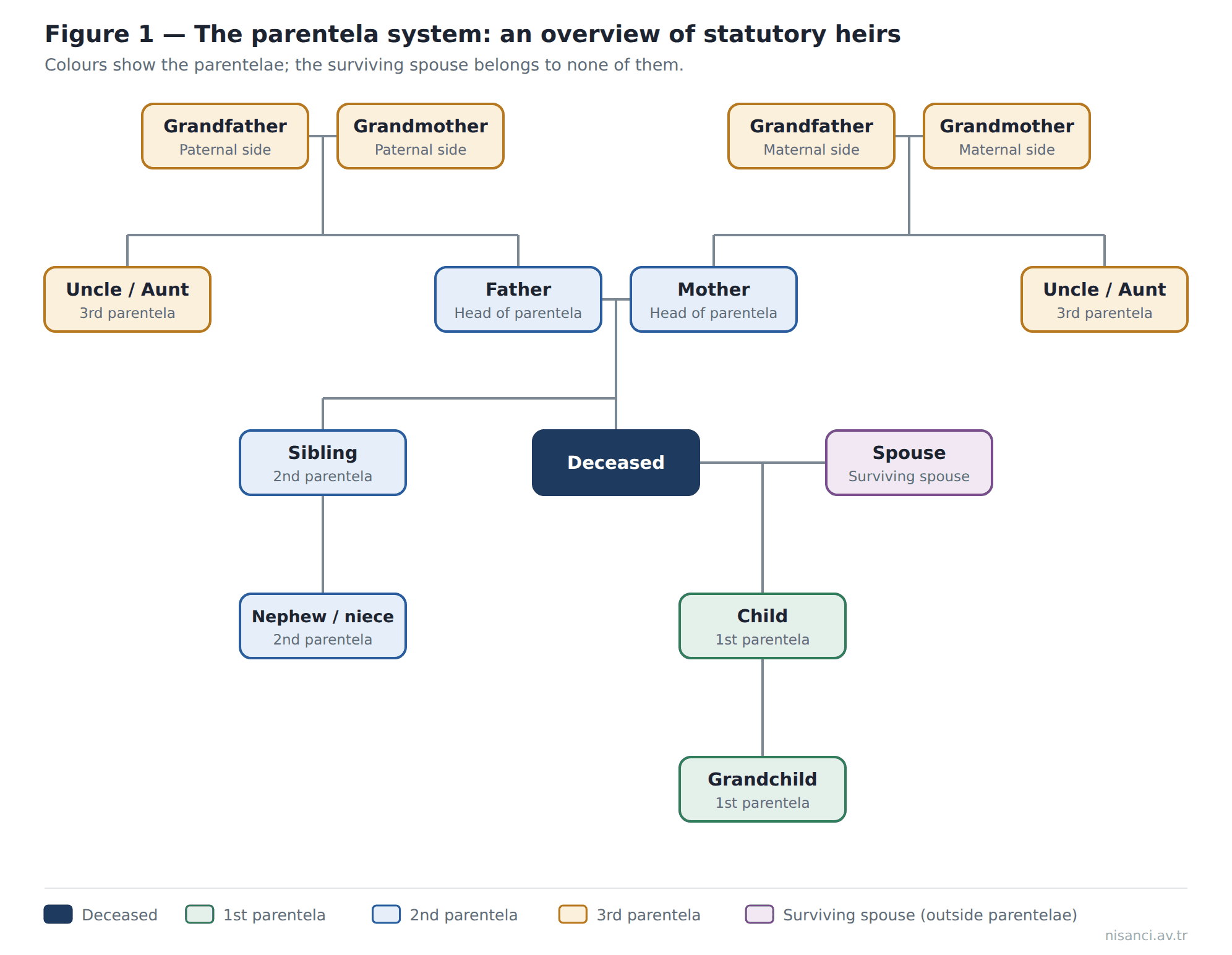
Figure 1 — The parentela system: an overview of statutory heirs
The Code provides for three parentelae:
First parentela: the descendants of the deceased (children, grandchildren and further descendants), without any limit as to degree.
Second parentela: the parents as heads of the parentela, together with their descendants (siblings, nephews and nieces, and further descendants).
Third parentela: the grandparents as heads of the parentela, together with their descendants (uncles, aunts and their descendants).
There is no fourth parentela. The ancestors of the grandparents and their descendants therefore never acquire the status of statutory heirs, however far back the family tree may be traced.
II. The Core Principles of the Parentela System
1. Priority between parentelae
The existence of even a single heir in an earlier parentela excludes every later parentela entirely. This principle operates regardless of the degree of kinship. A person's parents are related to them in the first degree, whereas a great-grandchild is related in the third degree. The great-grandchild nevertheless excludes the parents, because the great-grandchild belongs to the first parentela.
The Court of Cassation has put this principle in terms: "no one of the third degree may inherit while there is an heir of the second degree" (Court of Cassation, 8th Civil Chamber, Docket 2013/16658, Decision 2014/13055, 20.06.2014).
2. Division by stocks (lines) within a parentela
Within each parentela, the estate is divided equally among the stocks (lines) descending from the head of the parentela. In the first parentela, each child forms a separate stock together with their own descendants. In the second and third parentelae, the maternal and paternal sides are treated as separate lines. As long as the head of a stock is alive and able to inherit, that person's descendants do not inherit.
3. Representation at every degree
A head of a stock who died before the deceased is replaced by their own descendants "by way of representation at every degree" (Arts. 495(3), 496(2) and 497(2) TCC). The share that would have gone to the predeceased person therefore does not pass to other stocks. It stays within the same stock and passes down to the next generation.
4. General conditions for inheriting
Two conditions must be met for a person to inherit by statute. First, the person must be connected to the deceased by a legally recognised family tie that places them in one of the parentelae. Second, under Art. 580(1) TCC, the person must be "alive and capable of inheriting at the moment of the deceased's death".
Succession opens upon the death of the deceased (Art. 575 TCC). The main grounds that end a person's status as heir are:
Renunciation of the estate (Art. 605 et seq. TCC)
Unworthiness to inherit (Art. 578 TCC): for example, intentionally and unlawfully killing, or attempting to kill, the deceased
Waiver of inheritance by agreement with the deceased
Disinheritance
As a rule, the consequences of these grounds come close to treating the person concerned as having died before the deceased. Finally, entitlement to inherit and the passing of the estate are governed by the provisions in force on the date of the deceased's death (Art. 17 of Law No. 4722).
III. The First Parentela: Descendants
Art. 495 TCC: "The heirs of the first degree of the deceased are the deceased's descendants. Children inherit in equal shares. Children who died before the deceased are replaced, by way of representation at every degree, by their own descendants."
1. All children alive
Example 1. D dies leaving two children (C1 and C2), each of whom has one child (G1 and G2). The estate is divided equally between the two stocks: C1 and C2 each take 1/2. Because the heads of the stocks are alive, the grandchildren do not inherit.

Figure 2 — First parentela: children inherit equally
2. A child who died before the deceased
Example 2. C1 died before D, leaving two children (G1, G2). C2 is alive. The estate is first divided 1/2 per stock. By representation, C1's stock share passes to G1 and G2. G1 and G2 therefore take 1/4 each, and C2 takes 1/2.
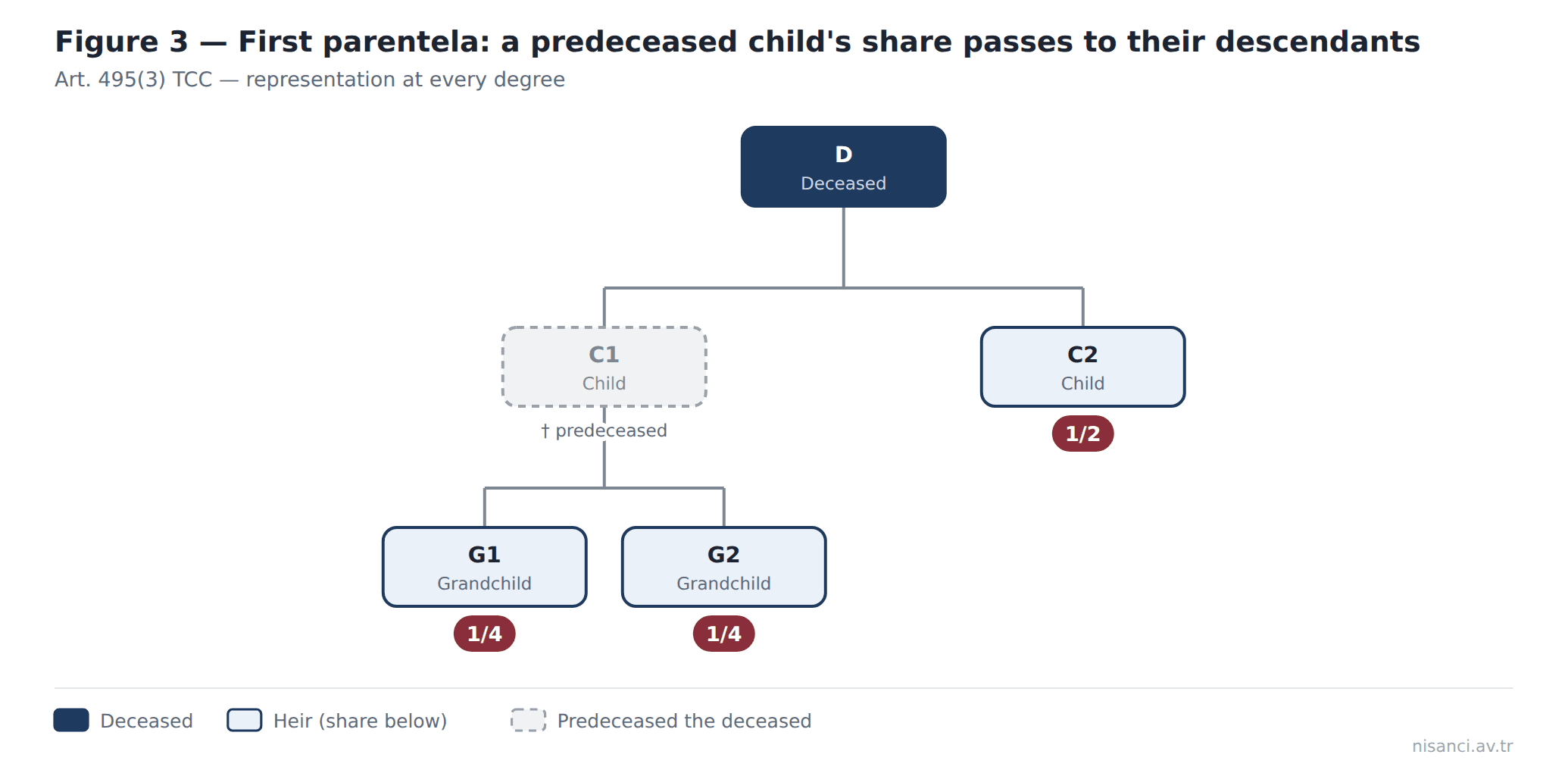
Figure 3 — First parentela: a predeceased child's share passes to their descendants
3. Division per stirpes
Example 3. Both C1 and C2 died before D. C1 left two children (G1, G2) and C2 left one child (G3). Since all three heirs are in the same degree, one might expect each to take 1/3. Under Turkish law, however, the estate is divided per stirpes (by stock), not per capita (by head). Each stock first receives 1/2, and each stock is then divided internally. As a result, G1 and G2 take 1/4 each and G3 takes 1/2.
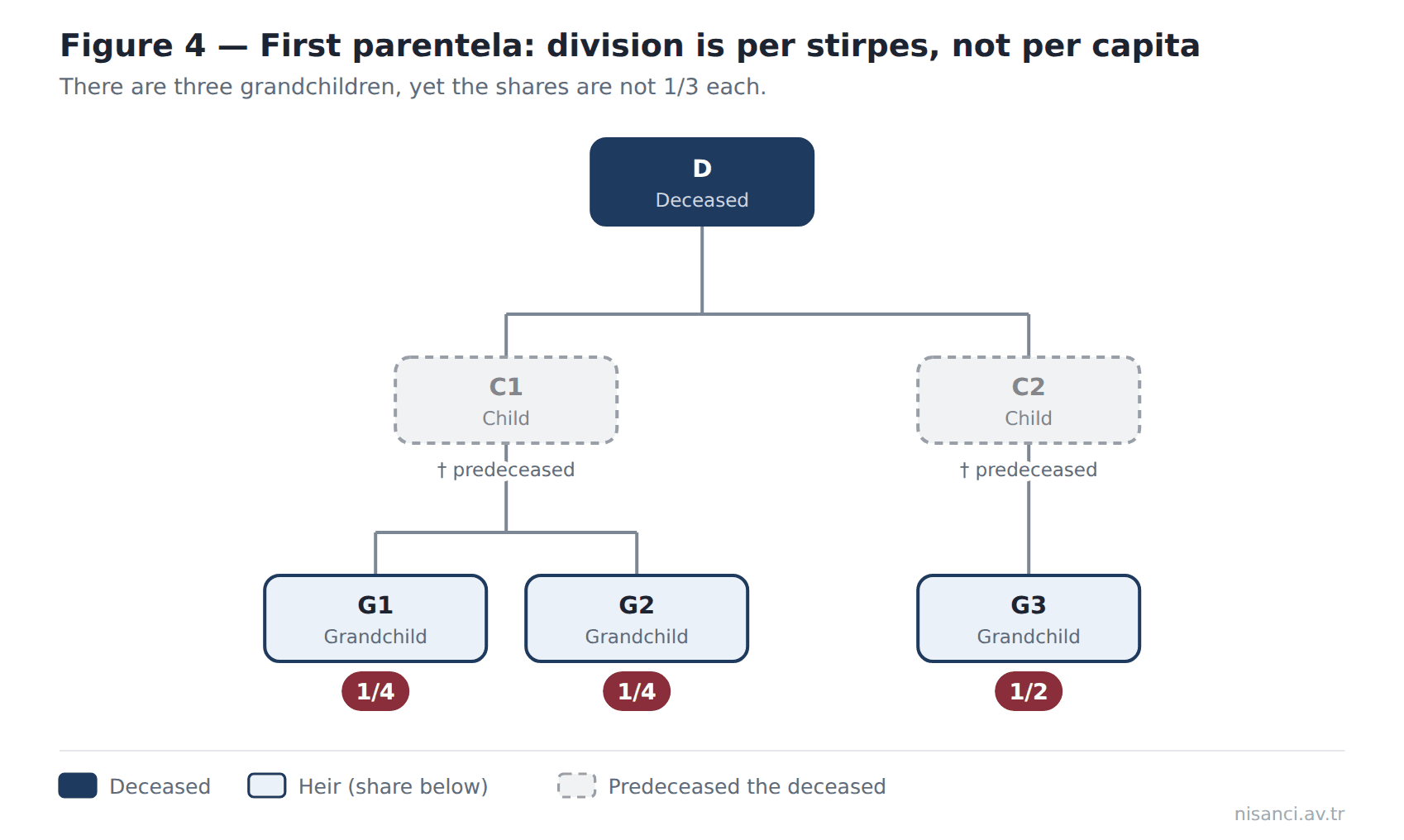
Figure 4 — First parentela: division is per stirpes, not per capita
4. Children born outside marriage
Art. 498 TCC: "Persons born outside marriage whose parentage has been established by recognition or by court judgment inherit on the father's side in the same way as relatives born within marriage."
The legal tie between a child and the mother arises automatically at birth. The tie between a child and the father arises through marriage to the mother, recognition or a court judgment (Art. 282 TCC). Once paternity has been established in one of these ways, a child born outside marriage stands on the father's side in exactly the same legal position as the father's children born within marriage.
Example 4. D leaves one child born within marriage (C1) and one child born outside marriage whom D recognised (C2). Each child takes 1/2.
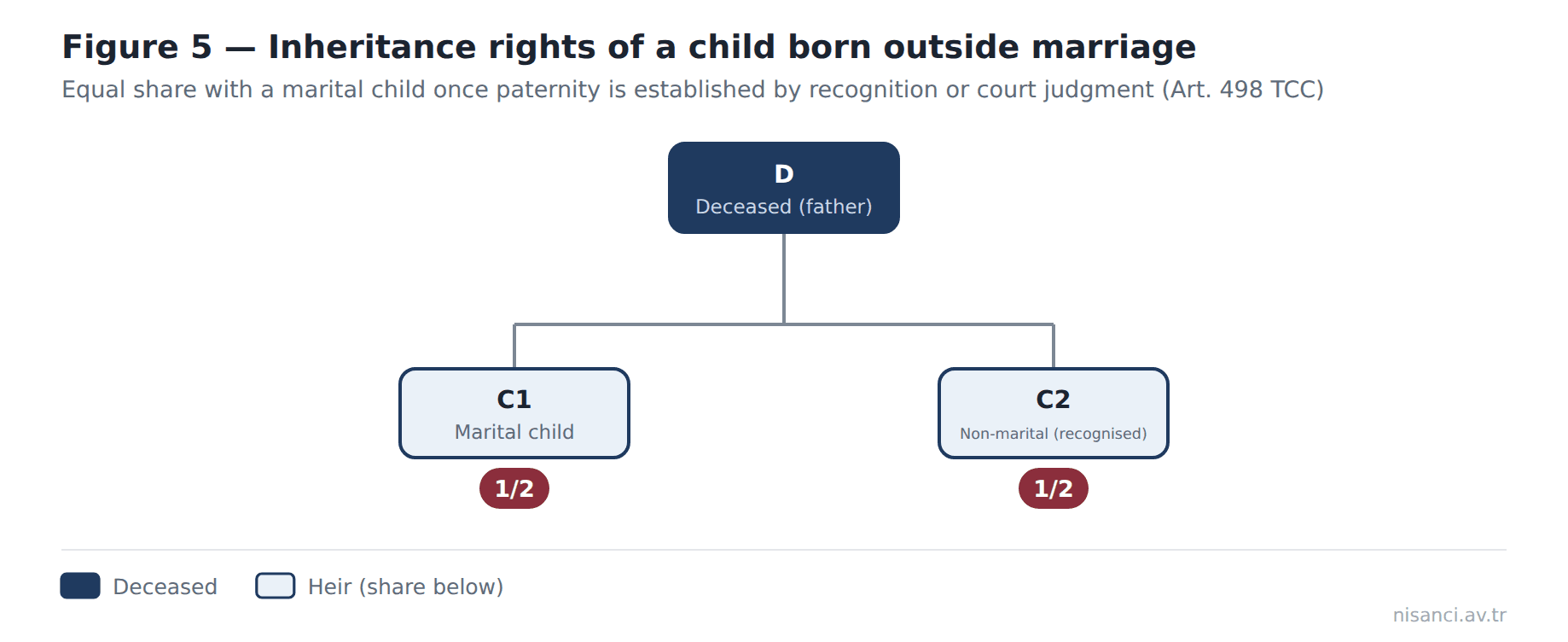
Figure 5 — Inheritance rights of a child born outside marriage
In its original form, the repealed Turkish Civil Code No. 743 gave a child born outside marriage only half the share of a child born within marriage. The Constitutional Court annulled this distinction. Under Art. 17 of Law No. 4722, the rule applicable to older deaths must be determined separately by reference to the date of death.
In practice, paternity is sometimes established by a court judgment only after the deceased has died. In that case, the existing certificate of inheritance is annulled and a new one is issued. In one such case, the Court of Cassation took the final judgment establishing paternity as the basis for the heirs' shares. It nevertheless reversed the first-instance decision, because the calculation had overlooked that the share of a grandchild who died after the deceased passes to that grandchild's own heirs, including their spouse (Art. 580(2) TCC) (Court of Cassation, 7th Civil Chamber, Docket 2021/7310, Decision 2022/8168, 29.12.2022).
5. The share of an heir who renounces the estate
Art. 611(1) TCC: "If one of the statutory heirs renounces the estate, that heir's share passes to those entitled as if the heir had not been alive when the succession opened."
Example 5. C1 has renounced the estate and has two children (G1, G2). C1 is treated as if not alive when the succession opened. C1's share therefore passes by representation to G1 and G2, at 1/4 each. C2's share remains unchanged at 1/2.
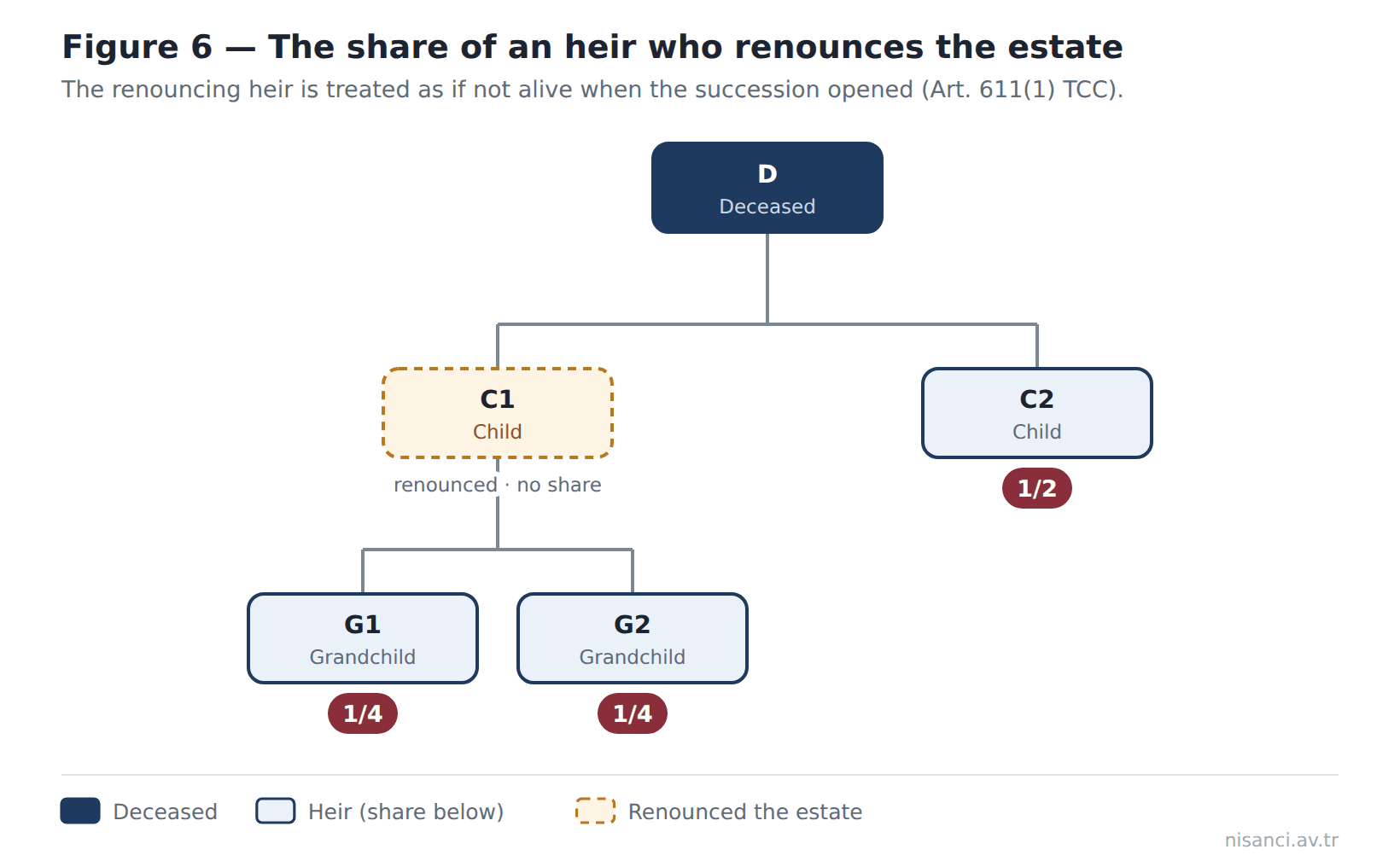
Figure 6 — The share of an heir who renounces the estate
The position is different where all of the nearest statutory heirs renounce the estate. Representation does not operate in that case. Instead, the estate is liquidated by the civil court of peace under the rules of bankruptcy law. Any value remaining after liquidation is handed over to those entitled as though they had not renounced (Art. 612 TCC).
IV. The Second Parentela: Parents and Their Descendants
Art. 496 TCC: "The heirs of a deceased who leaves no descendants are the deceased's mother and father. They inherit in equal shares. A mother or father who died before the deceased is replaced, by way of representation at every degree, by their own descendants. If there is no heir at all on one side, the whole estate passes to the heirs on the other side."
In the second parentela, the estate is first divided 1/2 between the maternal line and the paternal line. Each line's share goes to the head of that line or, if the head died before the deceased, to the head's descendants.
1. Both parents alive
Example 6. D leaves no descendants, and both of D's parents are alive. Each parent takes 1/2. Because the heads of the parentela are alive, D's sibling (S1) does not inherit.
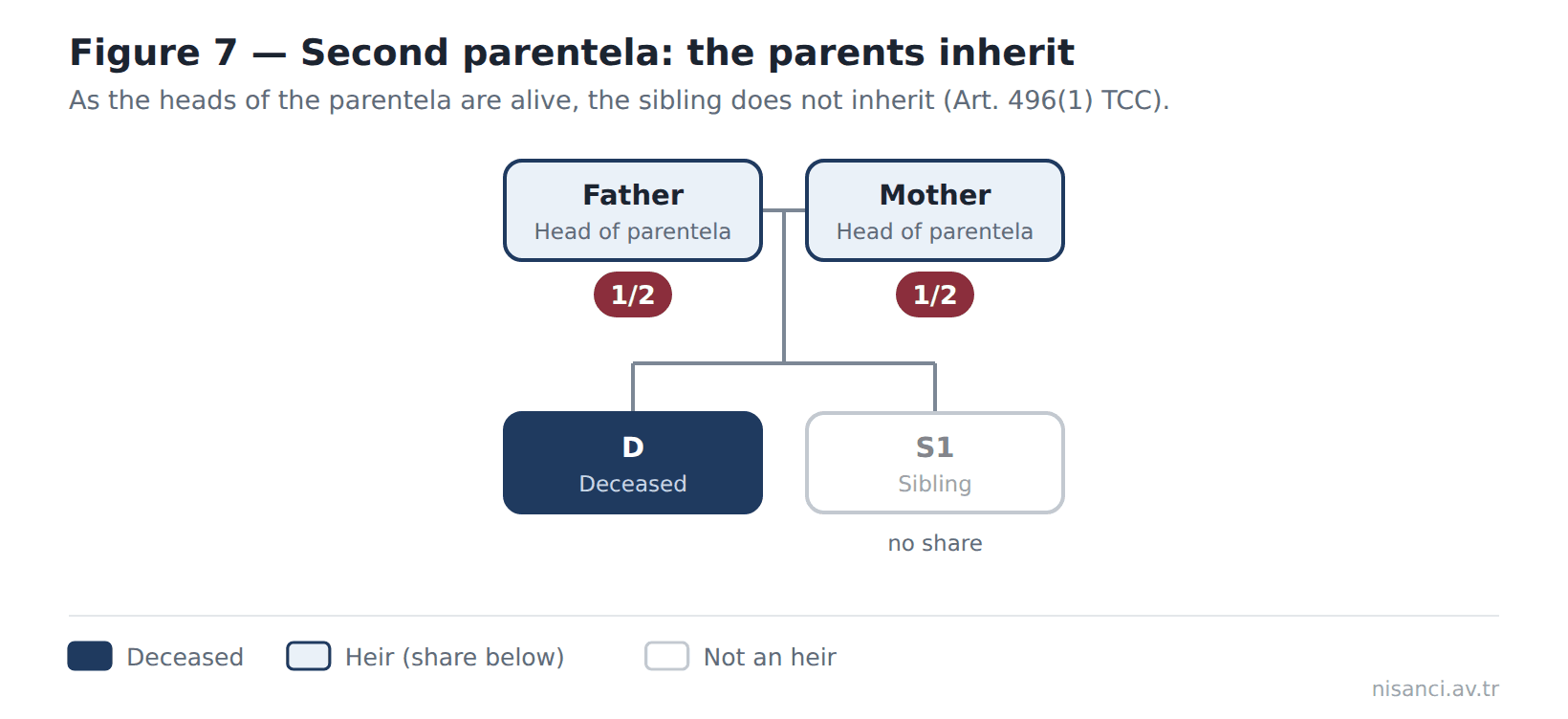
Figure 7 — Second parentela: the parents inherit
2. One parent died before the deceased
Example 7. D's mother died before D, and D's father is alive. D has two siblings (S1, S2). The paternal line's 1/2 goes to the father. The maternal line's 1/2 passes to the mother's descendants, S1 and S2, at 1/4 each.
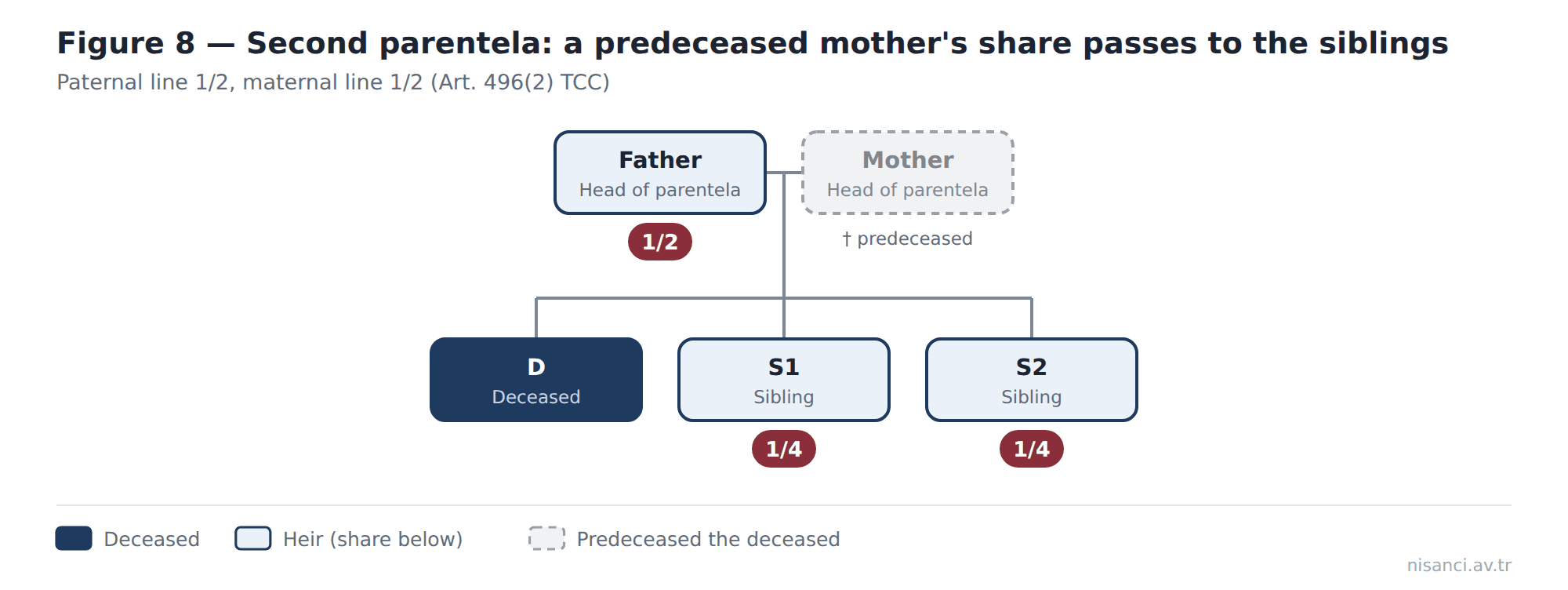
Figure 8 — Second parentela: a predeceased mother's share passes to the siblings
3. No heirs on one side
Example 8. D's mother died before D and has no descendants other than D. Since there is no heir on the maternal line, the whole estate passes to the paternal line, i.e. to the father, under Art. 496(3) TCC.
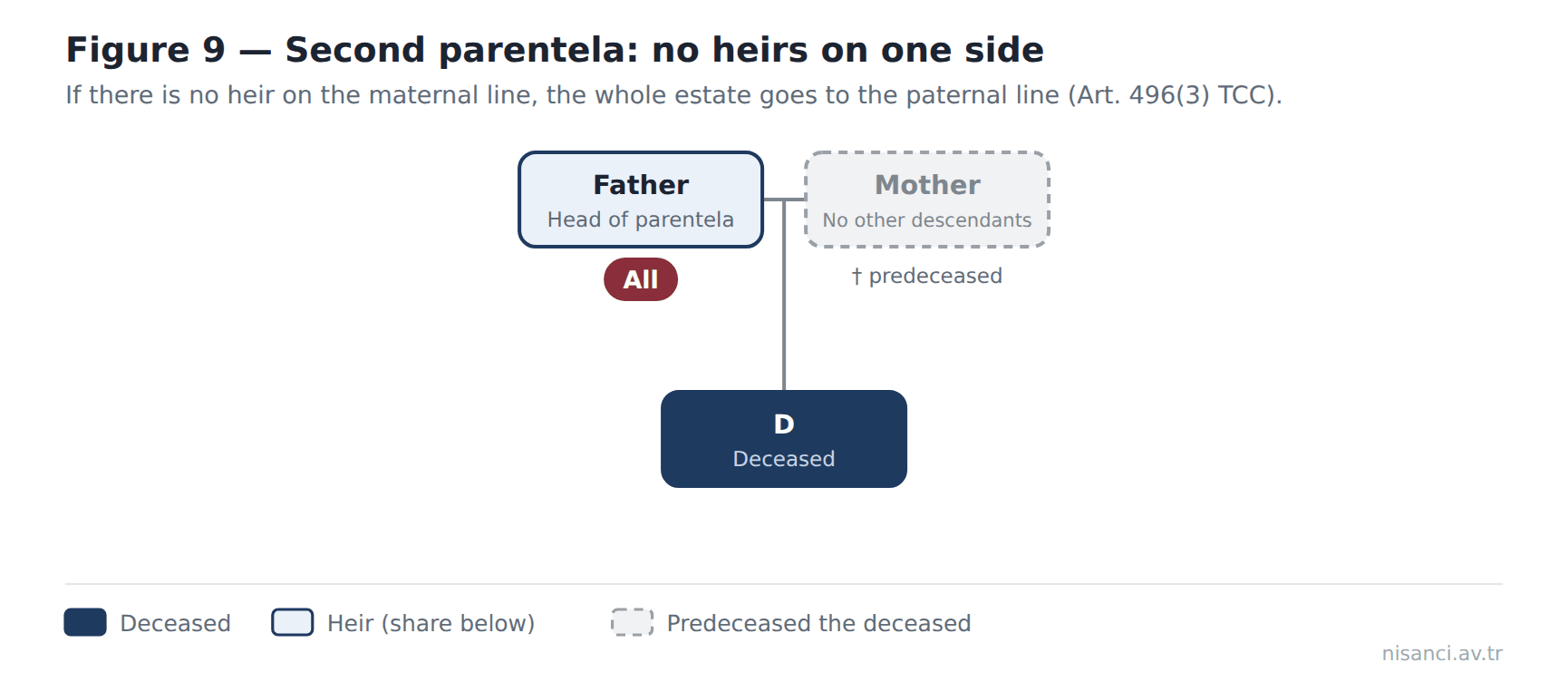
Figure 9 — Second parentela: no heirs on one side
4. Siblings and nephews and nieces
Example 9. Both of D's parents died before D. Sibling S1 is alive. Sibling S2 died before D, leaving two children (N1, N2).
Each line's 1/2 is first divided among the stocks of that line. On each line, S1 takes 1/4. S2's stock share of 1/4 passes to N1 and N2 at 1/8 each. Adding the two lines together, S1 takes 1/2, and N1 and N2 take 1/4 each.
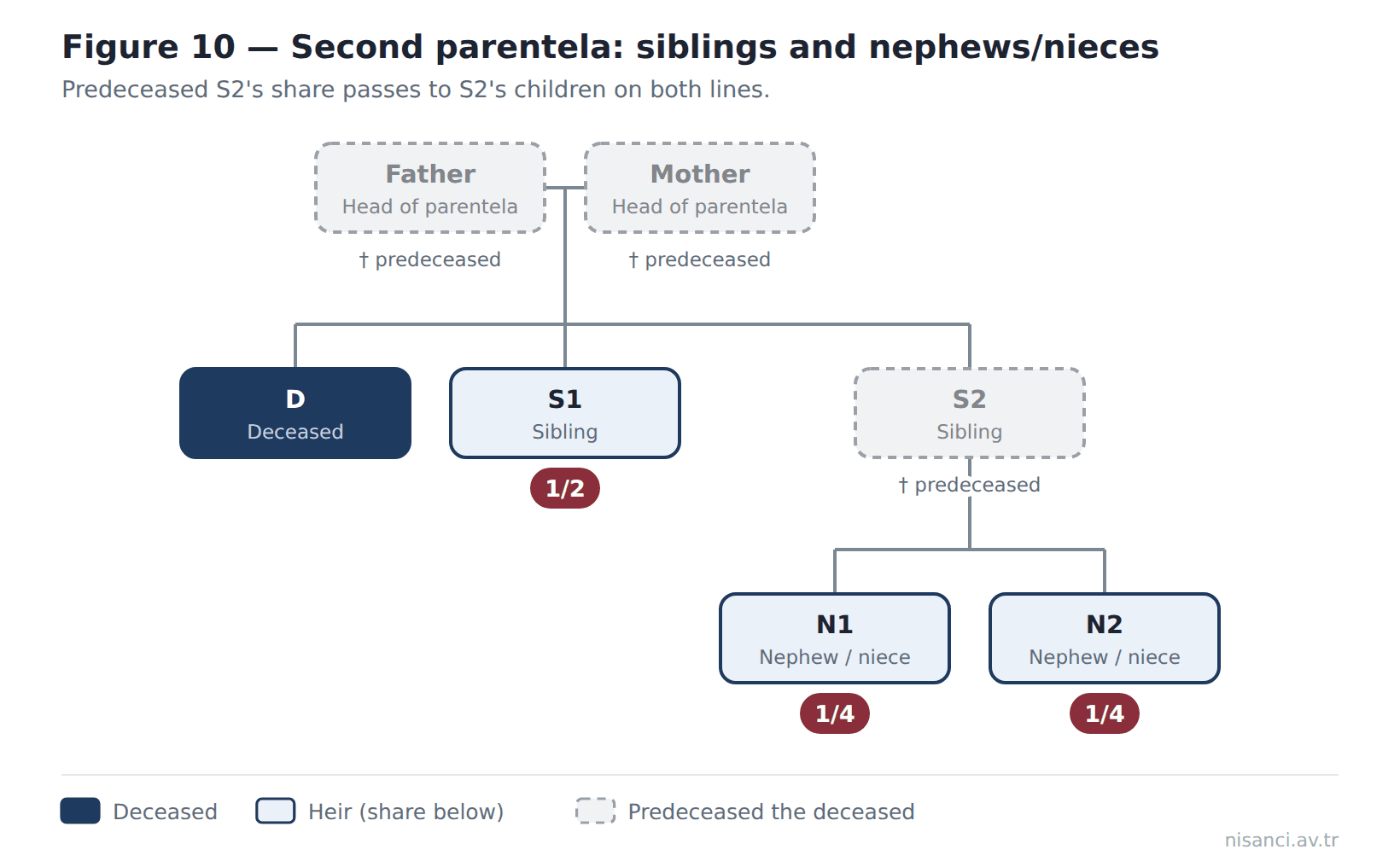
Figure 10 — Second parentela: siblings and nephews/nieces
5. Full siblings and half-siblings
The line principle has its most visible effect in the case of half-siblings. A maternal half-sibling inherits only from the maternal line, and a paternal half-sibling only from the paternal line. The Court of Cassation has expressly held that a full sibling takes from both lines, whereas a paternal half-sibling takes only from the paternal line (Court of Cassation, 14th Civil Chamber, Docket 2015/16812, Decision 2016/10451, 15.12.2016).
Example 10. Both of D's parents died before D. D has one full sibling (S1) and one maternal half-sibling (S2), a child of D's mother from another marriage. The maternal line's 1/2 is divided between S1 and S2 at 1/4 each. The paternal line's 1/2 goes entirely to S1, the father's only descendant. As a result, S1 takes 3/4 and S2 takes 1/4.
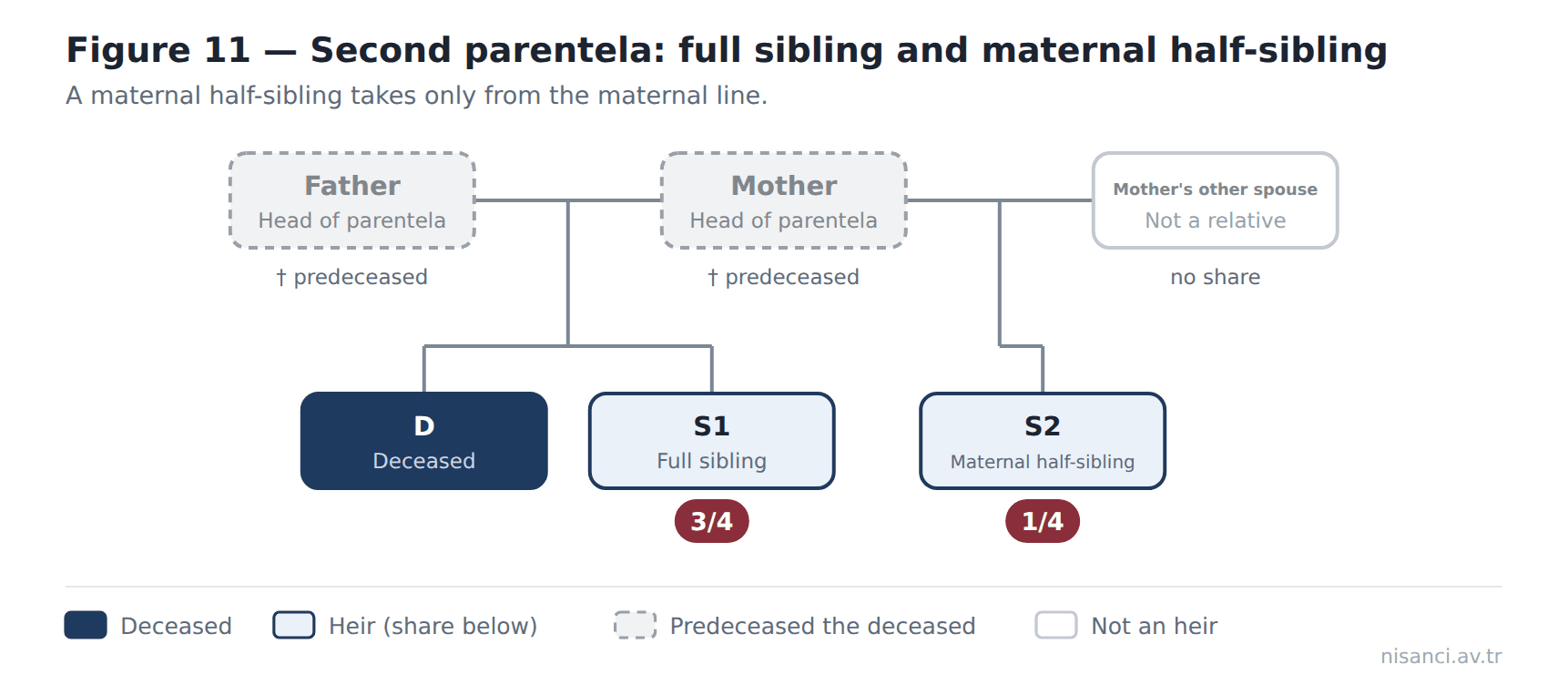
Figure 11 — Second parentela: full sibling and maternal half-sibling
If the father has no descendants at all, the whole estate passes to the maternal line under Art. 496(3) TCC, and hence to the maternal half-sibling (Court of Cassation, 8th Civil Chamber, Docket 2013/16658, Decision 2014/13055, 20.06.2014).
V. The Third Parentela: Grandparents and Their Descendants
Art. 497(1)–(4) TCC: "The heirs of a deceased who leaves no descendants, no parents and no descendants of the parents are the deceased's grandparents. They inherit in equal shares. Grandparents who died before the deceased are replaced, by way of representation at every degree, by their own descendants. If one of the grandparents on the maternal or paternal side died before the deceased without leaving descendants, that grandparent's share passes to the heirs on the same side. If both grandparents on the maternal or paternal side died before the deceased without leaving descendants, the whole estate passes to the heirs on the other side."
The third parentela is reached only where there is no heir at all in the first and second parentelae. The estate is first divided 1/2 between the maternal side and the paternal side. On each side, it is then divided 1/4 each between the grandmother and the grandfather.
1. All grandparents alive
Example 11. D has no heirs in the first or second parentela, and all four grandparents are alive. Each grandparent takes 1/4. Because the heads of the stocks are alive, D's uncle and aunt do not inherit.
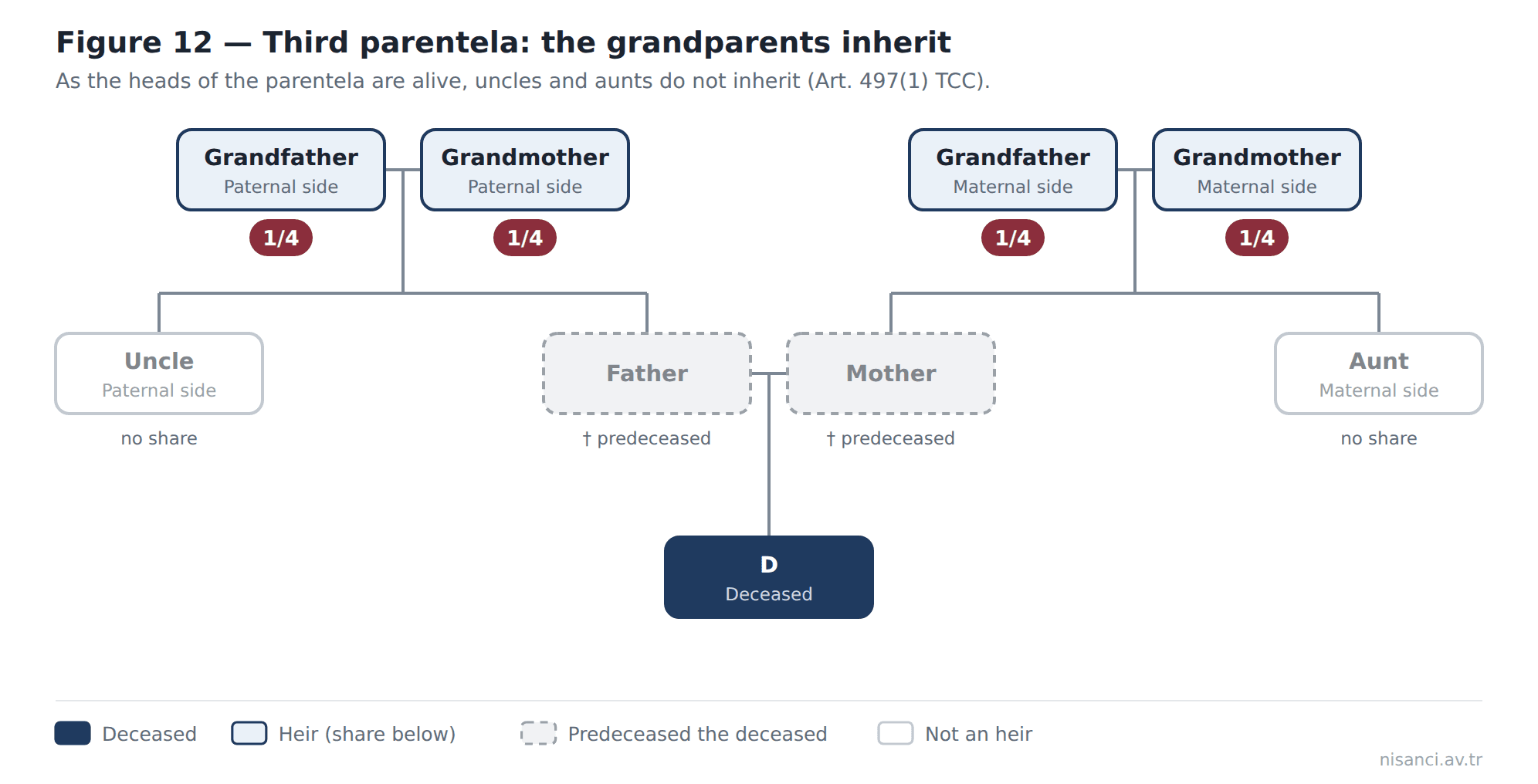
Figure 12 — Third parentela: the grandparents inherit
2. A grandparent who died before the deceased
Example 12. D's paternal grandfather died before D, leaving an uncle and an aunt. By representation, the grandfather's 1/4 passes to the uncle and the aunt at 1/8 each. The other three grandparents take 1/4 each.
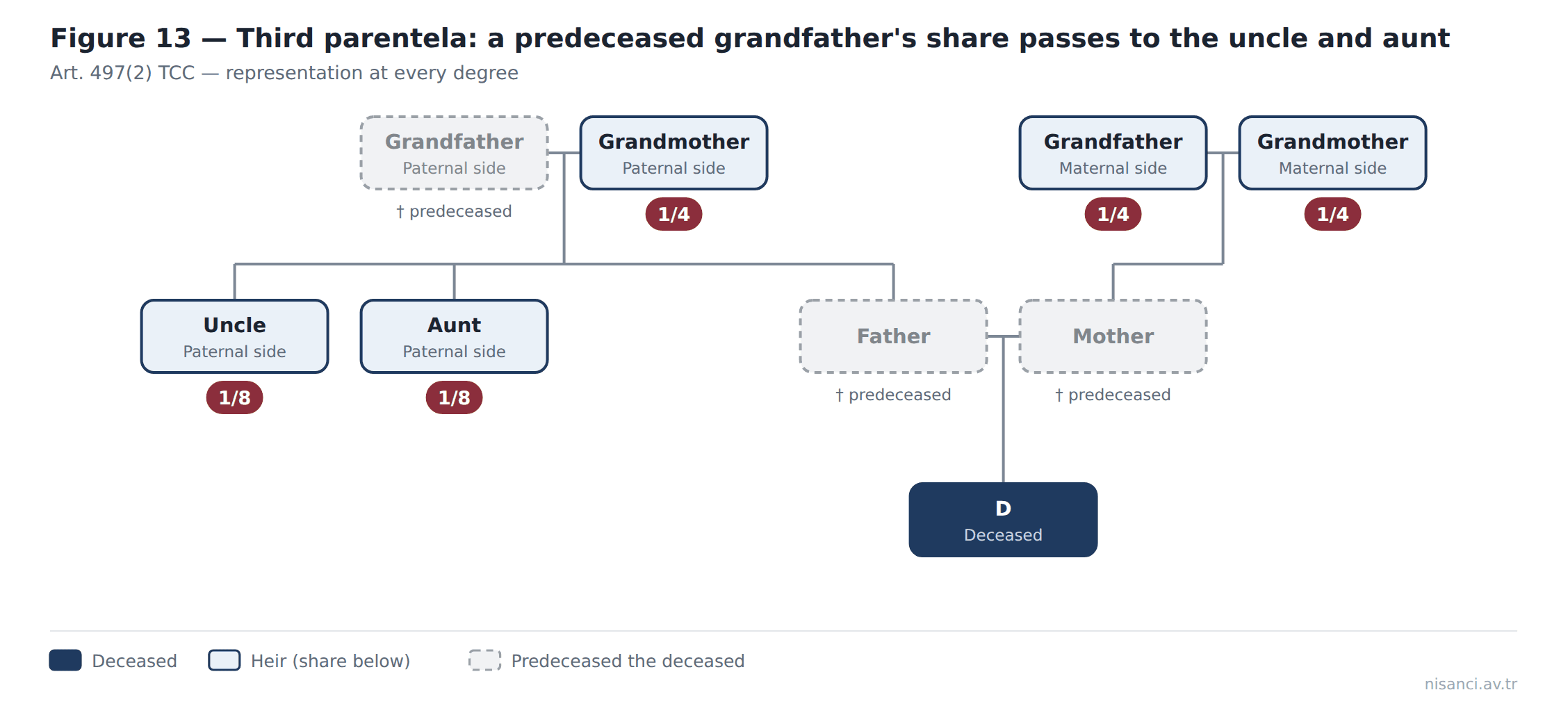
Figure 13 — Third parentela: a predeceased grandfather's share passes to the uncle and aunt
3. A grandparent who died without descendants
Example 13. D's maternal grandmother died before D and has no descendants (other than D's predeceased mother). Under Art. 497(3) TCC, her 1/4 goes to the grandfather on the same side. The maternal grandfather therefore takes 1/2, and the paternal grandparents take 1/4 each.
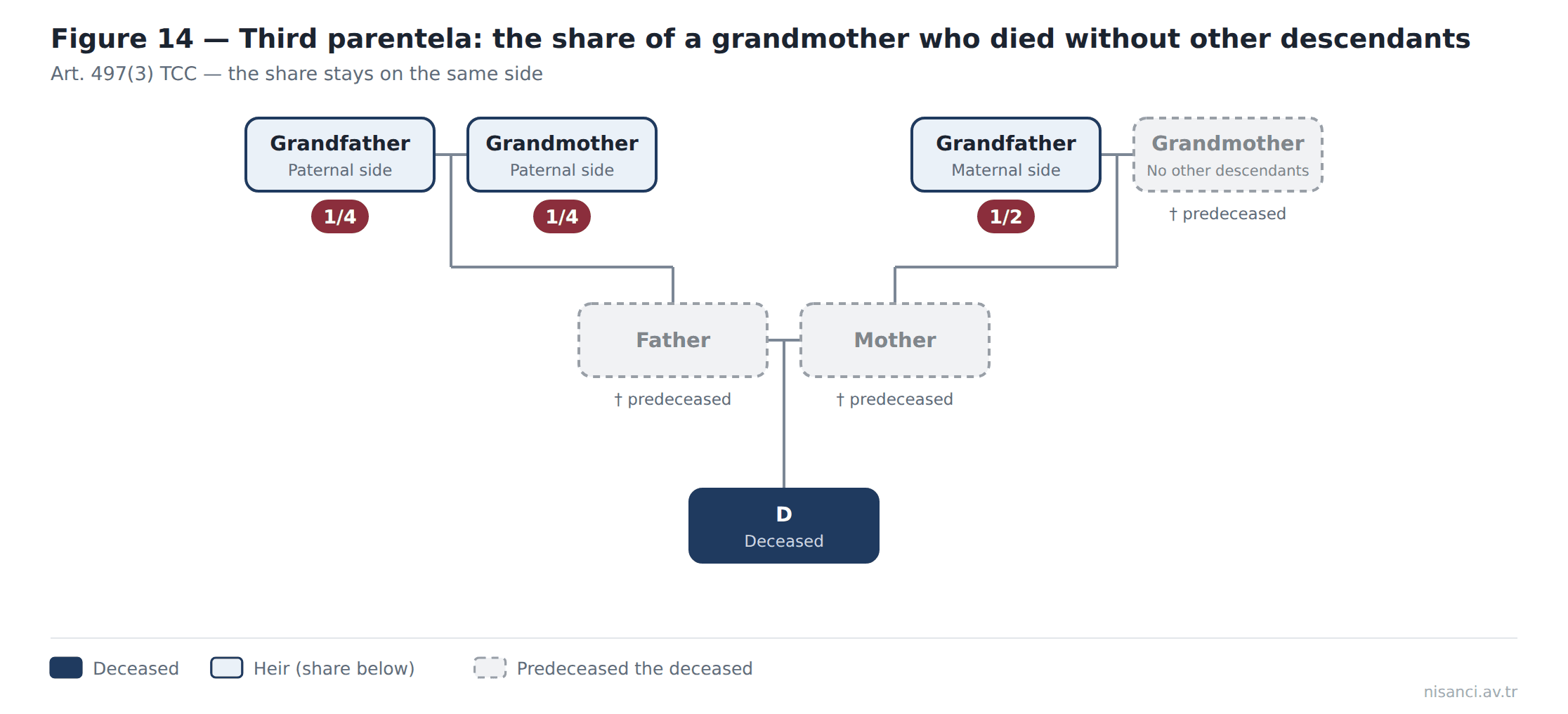
Figure 14 — Third parentela: the share of a grandmother who died without other descendants
4. No heirs at all on one side
Example 14. Both maternal grandparents died before D without leaving descendants. Under Art. 497(4) TCC, the whole estate passes to the paternal side, and the paternal grandparents take 1/2 each.
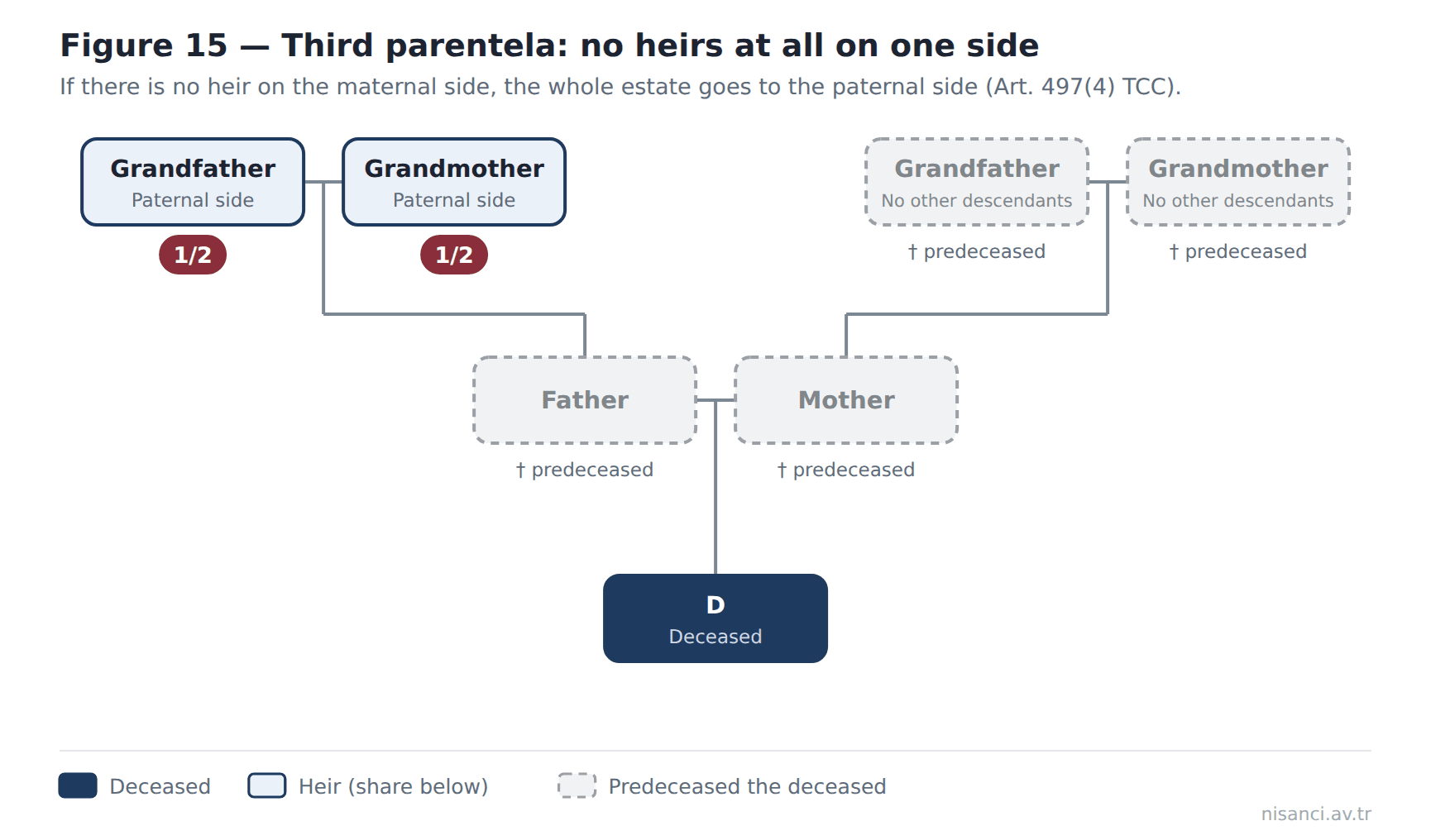
Figure 15 — Third parentela: no heirs at all on one side
VI. The Surviving Spouse
Art. 499 TCC: "The surviving spouse inherits from the deceased in the following proportions, according to the parentela with which the spouse inherits: 1. together with the deceased's descendants, one quarter of the estate; 2. together with the parentela of the deceased's parents, one half of the estate; 3. together with the deceased's grandparents and their children, three quarters of the estate; if there are none of these either, the whole estate passes to the spouse."
Parentela inheriting alongside the spouse | Spouse's share | Share left to the parentela |
|---|---|---|
First parentela (descendants) | 1/4 | 3/4 |
Second parentela (parents and their descendants) | 1/2 | 1/2 |
Third parentela (grandparents and their children) | 3/4 | 1/4 |
None | Whole estate | — |
The spouse's share is set aside first. The remainder is then distributed to the relevant parentela under the rules explained above.
1. Together with descendants
Example 15. D leaves a spouse and two children. The spouse takes 1/4. The remaining 3/4 is divided equally between the children, who take 3/8 each.
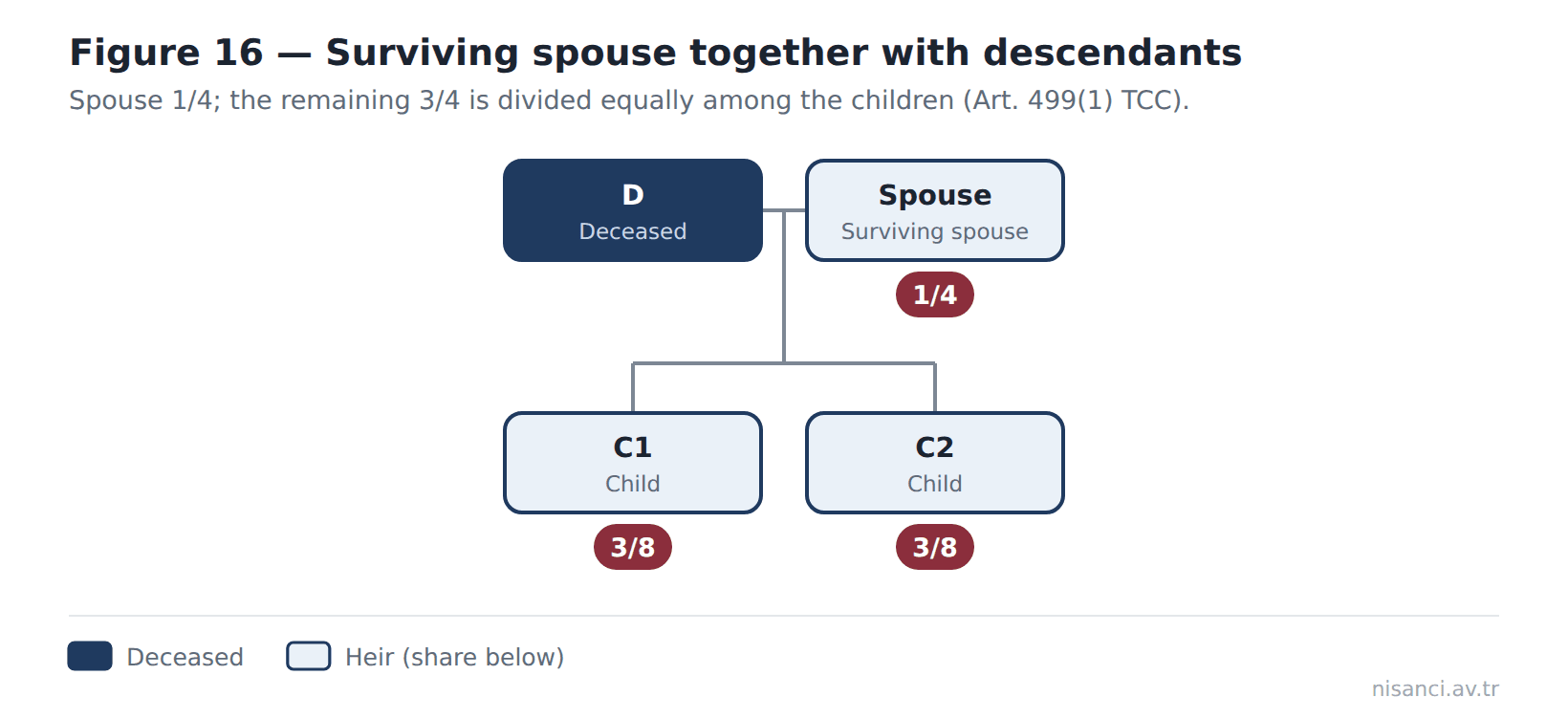
Figure 16 — Surviving spouse together with descendants
2. Together with the parents
Example 16. D has no descendants and leaves a spouse, a mother and a father. The spouse takes 1/2. The remaining 1/2 is divided between the parents, who take 1/4 each.
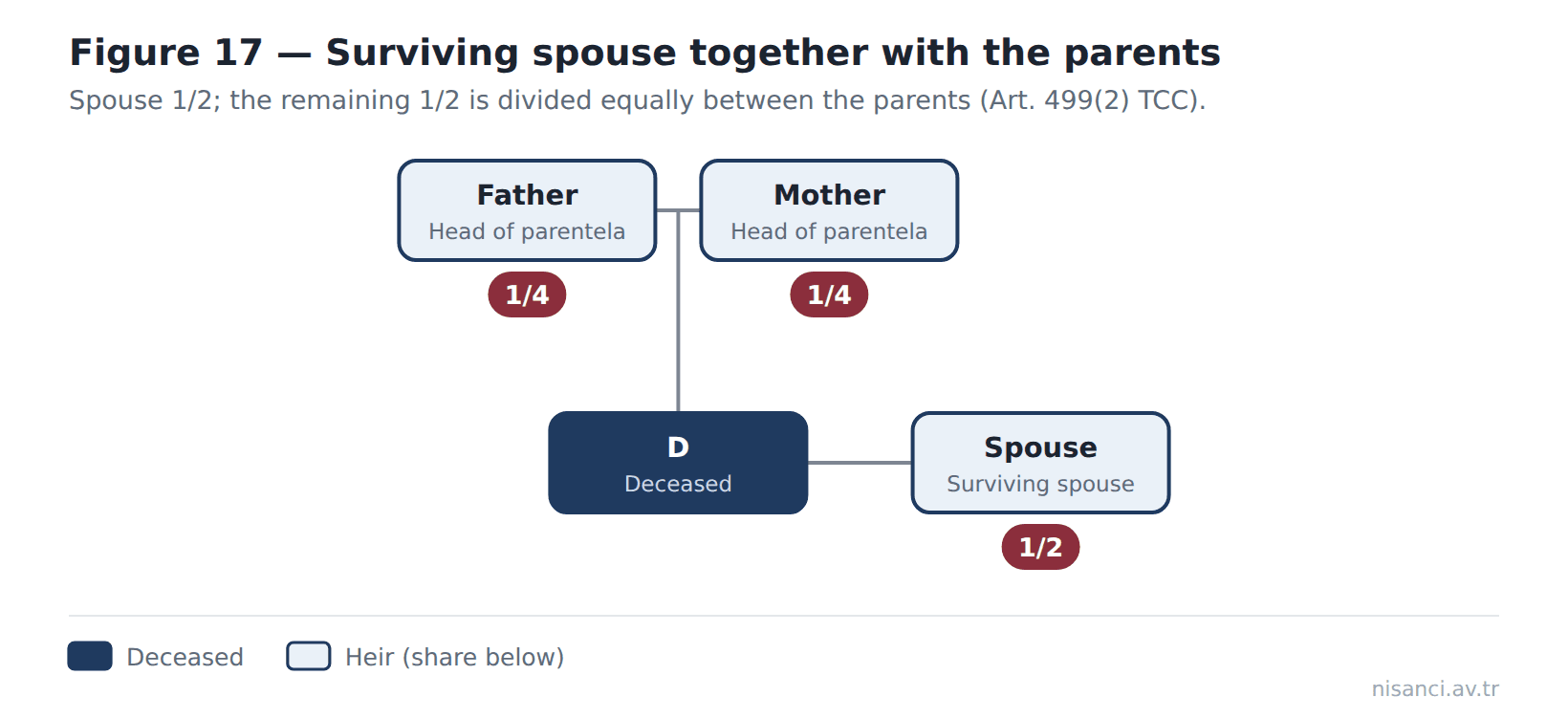
Figure 17 — Surviving spouse together with the parents
Example 17. D's mother died before D. D's father and one sibling (S1) are alive, as is D's spouse. The spouse takes 1/2. The 1/2 left to the second parentela is first split between the lines. The father takes his line's share of 1/4. The mother's 1/4 passes to her descendant, S1.
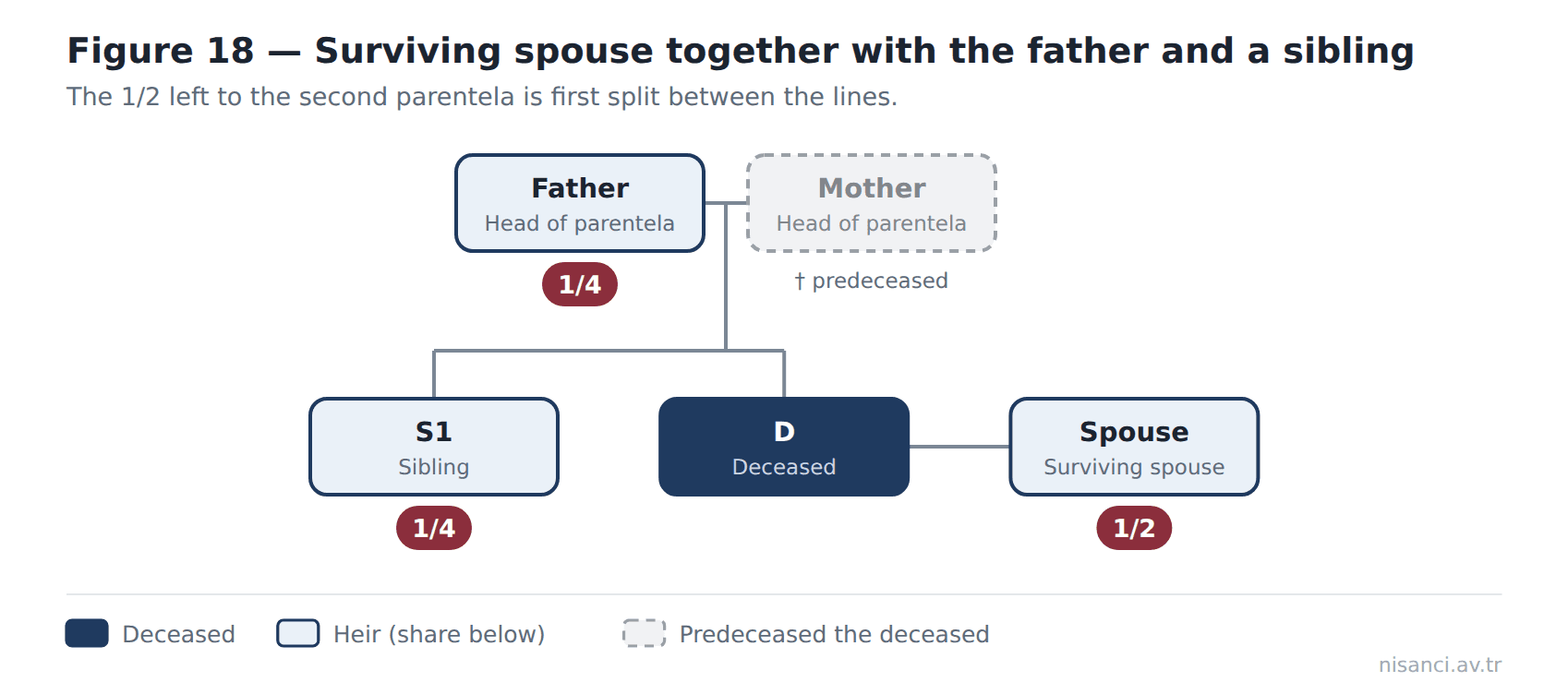
Figure 18 — Surviving spouse together with the father and a sibling
3. Together with the grandparents
Example 18. D has no heirs in the first or second parentela. D's spouse and all four grandparents are alive. The spouse takes 3/4. The remaining 1/4 is divided between the two sides and among the four grandparents, each of whom takes 1/16.
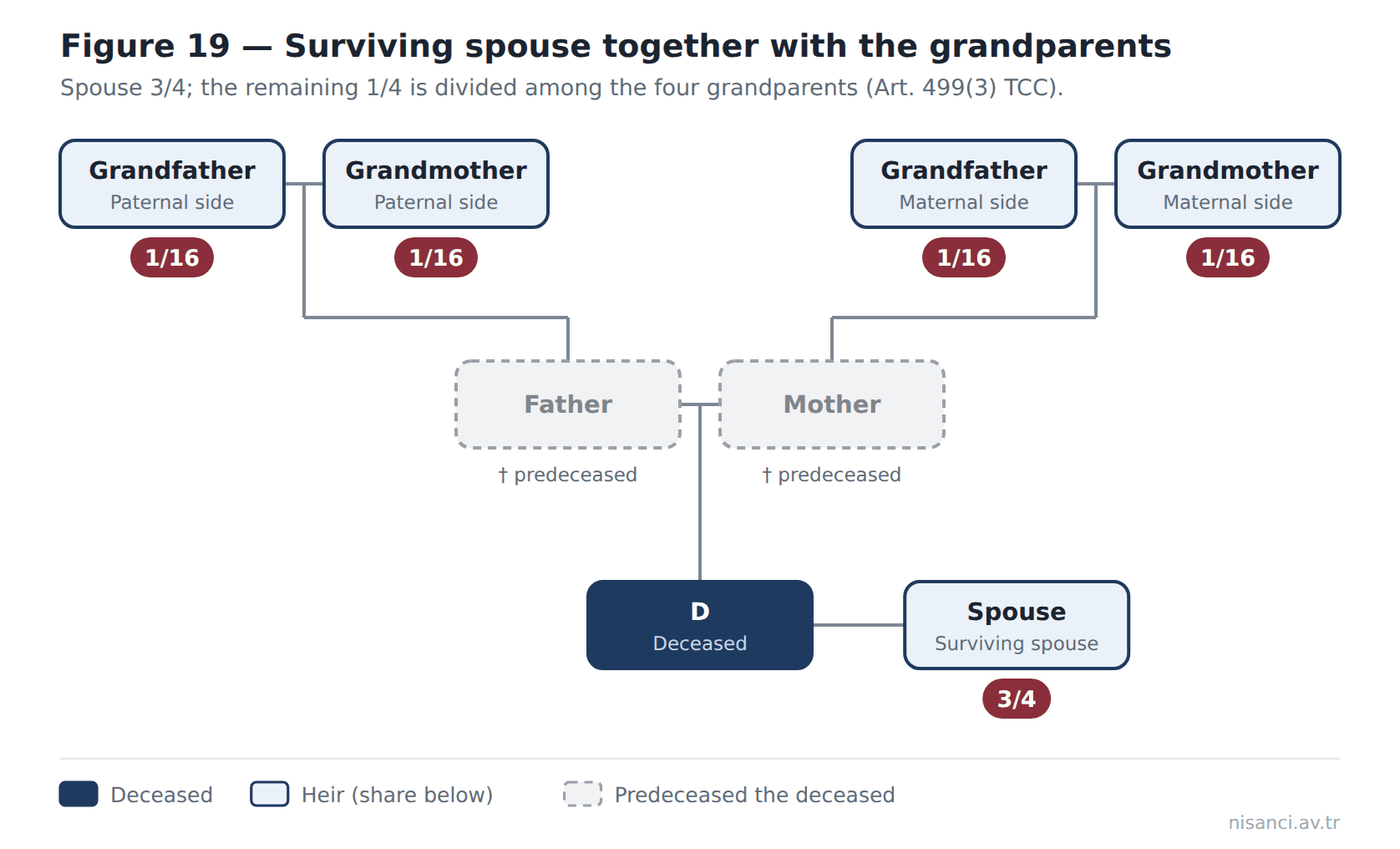
Figure 19 — Surviving spouse together with the grandparents
4. The third parentela is cut short when there is a surviving spouse
Where there is a surviving spouse, representation in the third parentela is restricted. Art. 499(3) TCC limits the persons who may inherit alongside the spouse to "the grandparents and their children". Art. 497(5) TCC gives concrete effect to this limit:
Art. 497(5) TCC: "Where there is a surviving spouse and one of the grandparents died before the deceased, that grandparent's share passes to their child; if there is no child, to the grandparents on that side; and if both grandparents on one side have died, their shares pass to the other side."
Accordingly, where there is a surviving spouse, the children of uncles and aunts (cousins) cannot inherit. The rule of "representation at every degree" does not apply here, and representation stops at the children of the grandparents.
Example 19. D's paternal grandfather died before D. His only child other than D's father, D's uncle, also died before D, leaving a child (a cousin). The spouse takes 3/4. The predeceased grandfather's 1/16 passes not to the cousin but to the grandmother on the same side. The paternal grandmother therefore takes 1/8, and the maternal grandparents take 1/16 each.
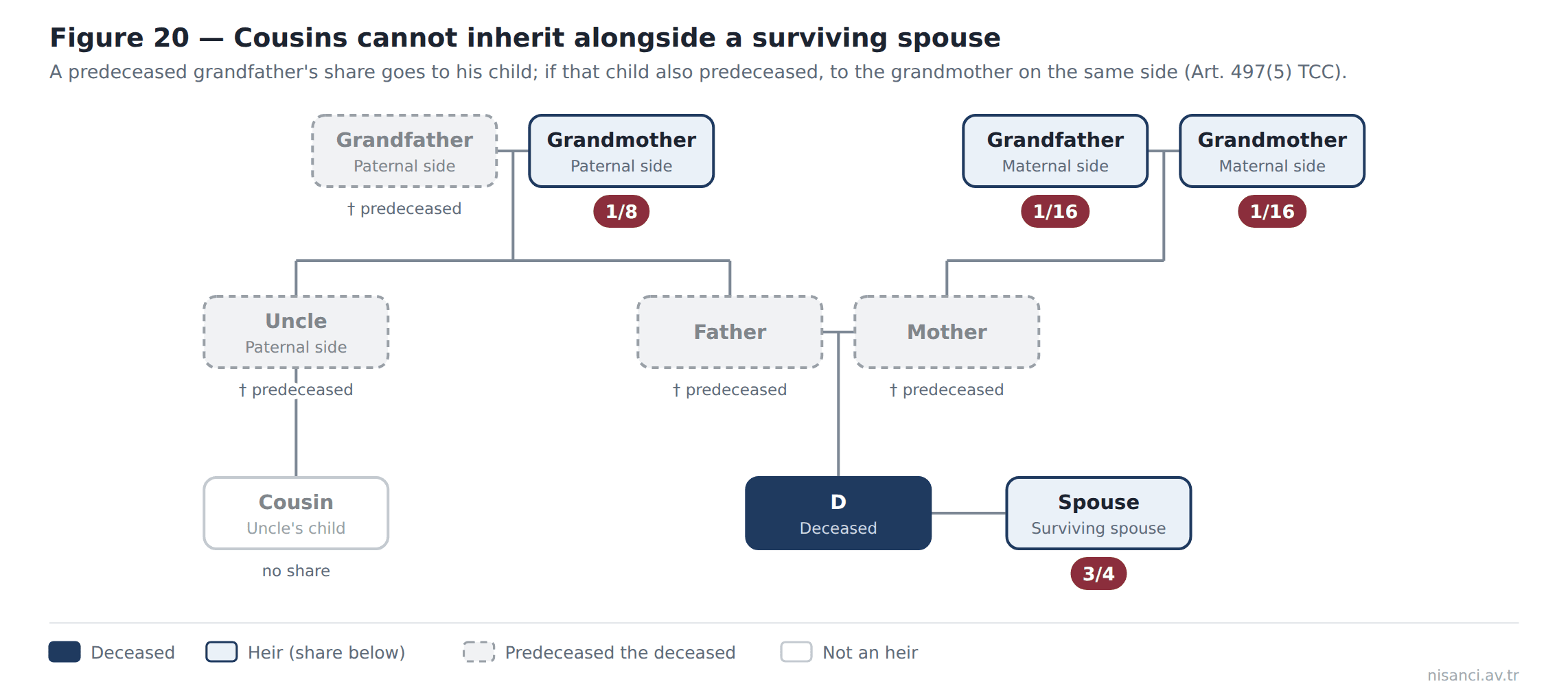
Figure 20 — Cousins cannot inherit alongside a surviving spouse
Example 20. All of the grandparents and all of their children died before D, and only cousins remain. In this case, the whole estate passes to the surviving spouse.
The Court of Cassation has held that awarding a share to the grandchildren of the grandparents was wrong. It stated expressly that, where the spouse is alive, grandchildren of the grandparents other than the grandparents' children cannot inherit, and that the whole estate belongs to the spouse (Court of Cassation, 7th Civil Chamber, Docket 2010/1548, Decision 2010/3221, 27.05.2010).
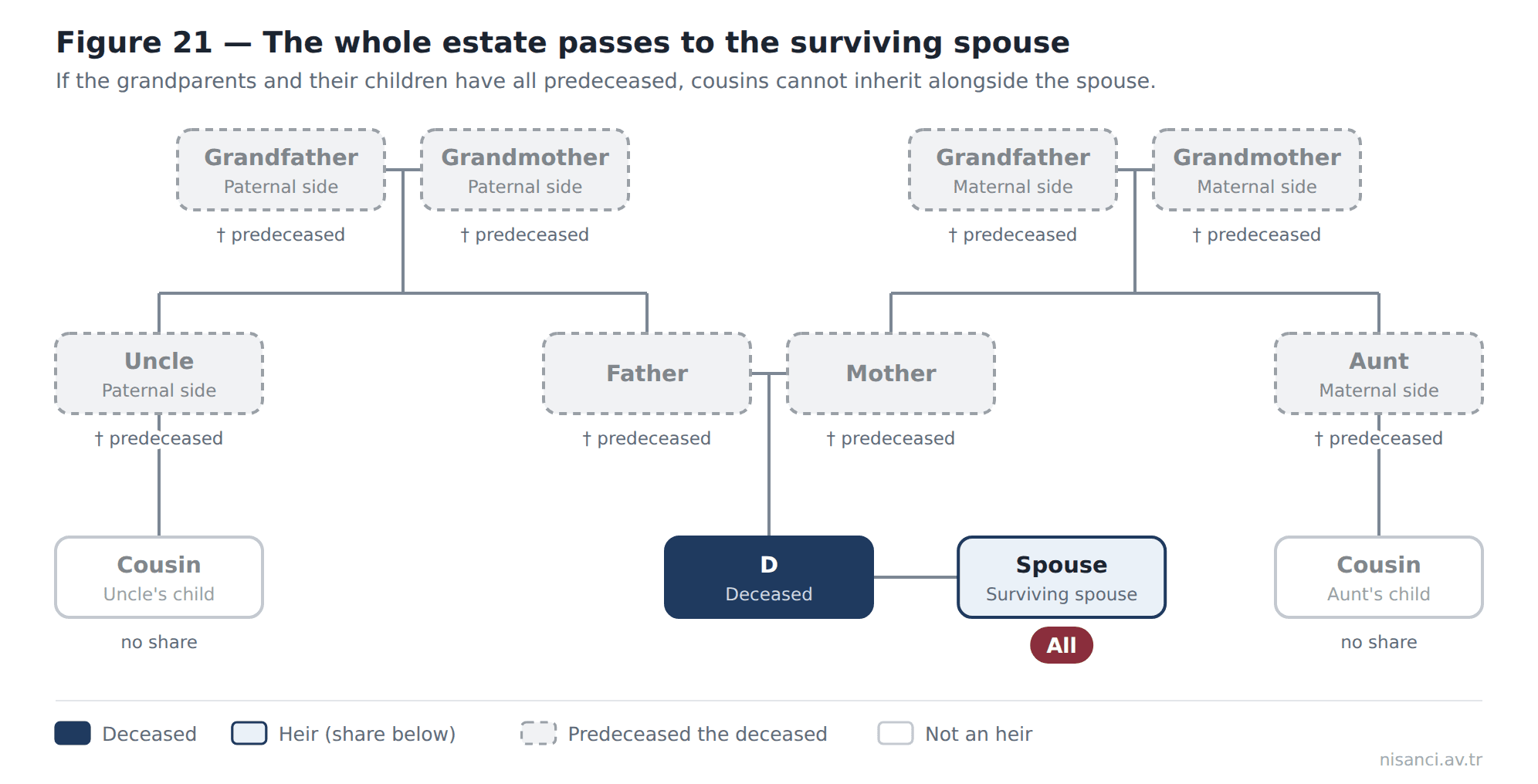
Figure 21 — The whole estate passes to the surviving spouse
5. Divorced spouses, and death during divorce proceedings
Art. 181 TCC: "Divorced spouses cannot be each other's statutory heirs in that capacity, and they lose the rights conferred on them by dispositions mortis causa made before the divorce, unless the contrary appears from the disposition. The preceding paragraph also applies where, during divorce proceedings, one of the heirs of the deceased spouse continues the proceedings and the fault of the other spouse is proven."
Example 21. D divorced and died leaving one child (C1) from that marriage. Because the divorce had become final, the ex-spouse is not an heir, and C1 takes the whole estate.
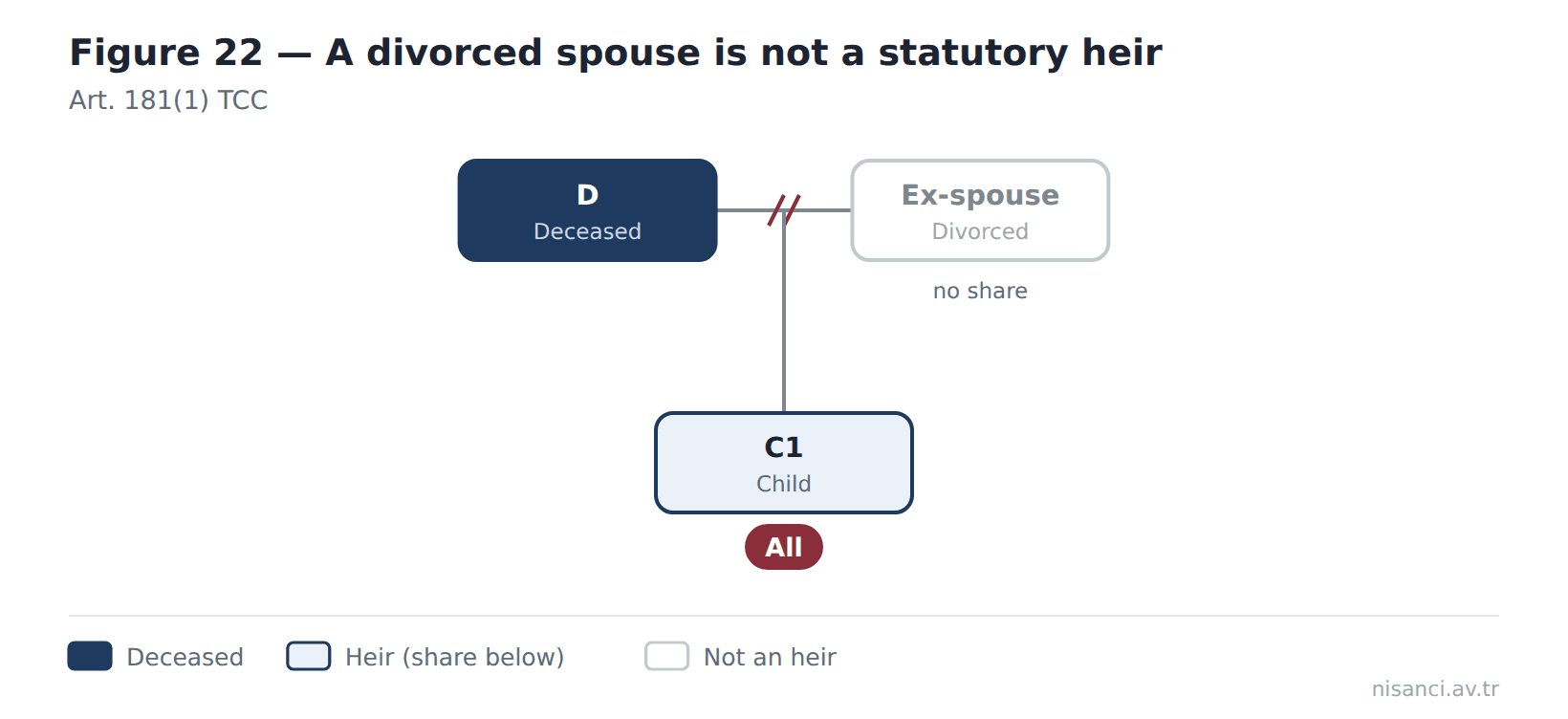
Figure 22 — A divorced spouse is not a statutory heir
Where one spouse dies while divorce proceedings are pending, the surviving spouse loses the status of heir only if three conditions are met. One spouse must have died during the proceedings, one of the deceased spouse's heirs must continue the proceedings, and the surviving spouse's fault must be proven.
The Court of Cassation holds that where one spouse dies before the divorce judgment becomes final, the marriage ends by death. A later annotation declaring the divorce judgment final therefore has no legal effect, and the case must be examined as to fault under Art. 181(2) (Court of Cassation, 2nd Civil Chamber, Docket 2022/9263, Decision 2023/985, 13.03.2023, as quoted in the decision of the same Chamber in the same case file, Docket 2024/483, Decision 2024/1228, 27.02.2024).
6. Relationship with the liquidation of the matrimonial property regime
When the estate of a married deceased is determined, the matrimonial property regime between the spouses is liquidated before the estate is divided. Under the statutory regime of participation in acquired property, the surviving spouse first receives their participation claim. Only the remaining value enters the estate, and the spouse then also takes their inheritance share under Art. 499 TCC from that estate. For this reason, the total value the surviving spouse receives will often considerably exceed the proportion stated in Art. 499.
VII. Adopted Children
Art. 500 TCC: "The adopted child and the adopted child's descendants inherit from the adoptive parent as blood relatives do. The adopted child's inheritance rights within their own family continue. The adoptive parent and the adoptive parent's relatives do not inherit from the adopted child."
The adopted child stands in the first parentela of the adoptive parent in the same position as a biological child. The adoption does not, however, create inheritance rights between the adopted child and the adoptive parent's relatives. The adopted child does not inherit from the adoptive parent's parents or siblings.
Example 22. D leaves a spouse, a biological child (C1) and an adopted child (A). The spouse takes 1/4. The remaining 3/4 is divided equally between C1 and A, who take 3/8 each.
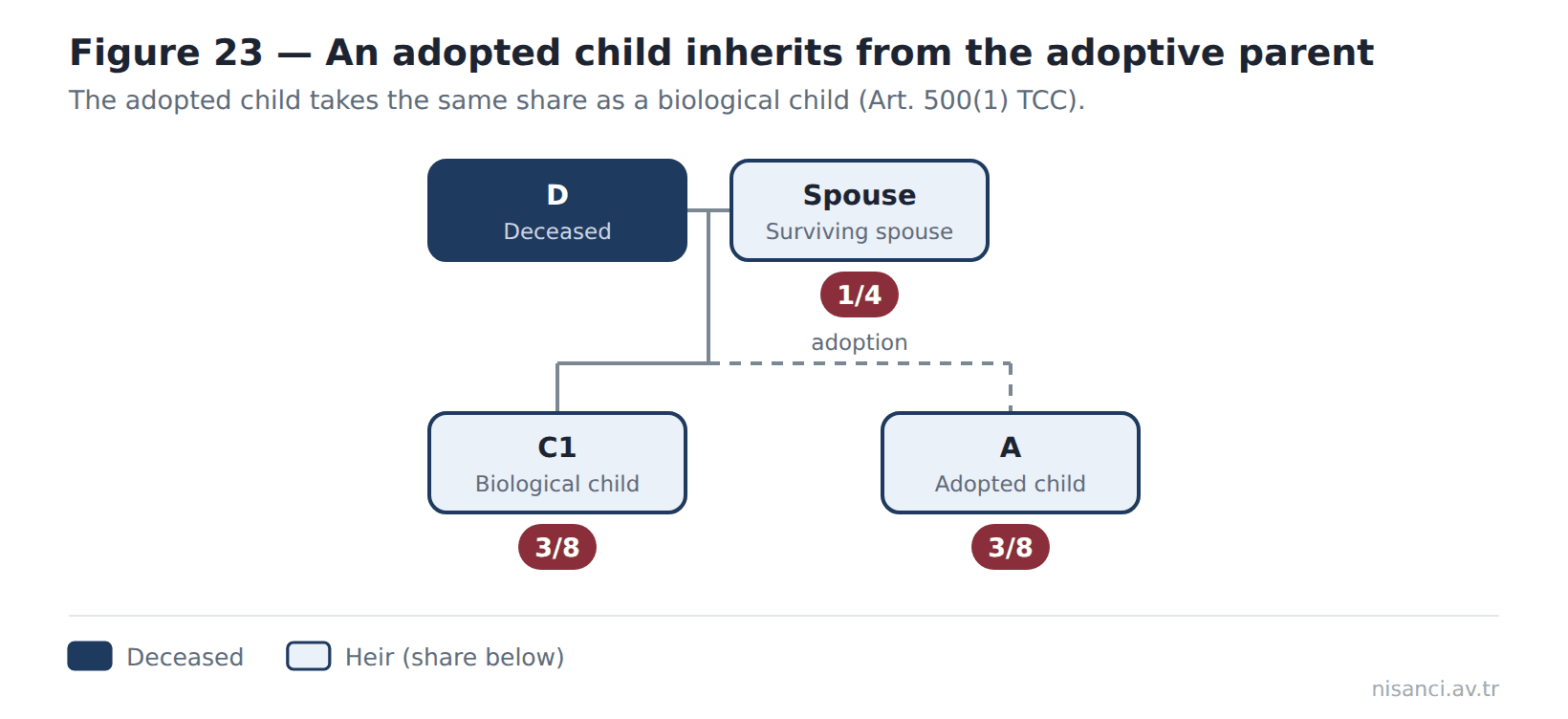
Figure 23 — An adopted child inherits from the adoptive parent
The relationship runs in one direction only. The adoptive parent and the adoptive parent's relatives do not inherit from the adopted child. The adopted child's inheritance ties with the birth family, on the other hand, continue.
Example 23. The adopted child A dies without a spouse or descendants. A's estate passes to A's birth mother and birth father at 1/2 each. The adoptive parent takes nothing.
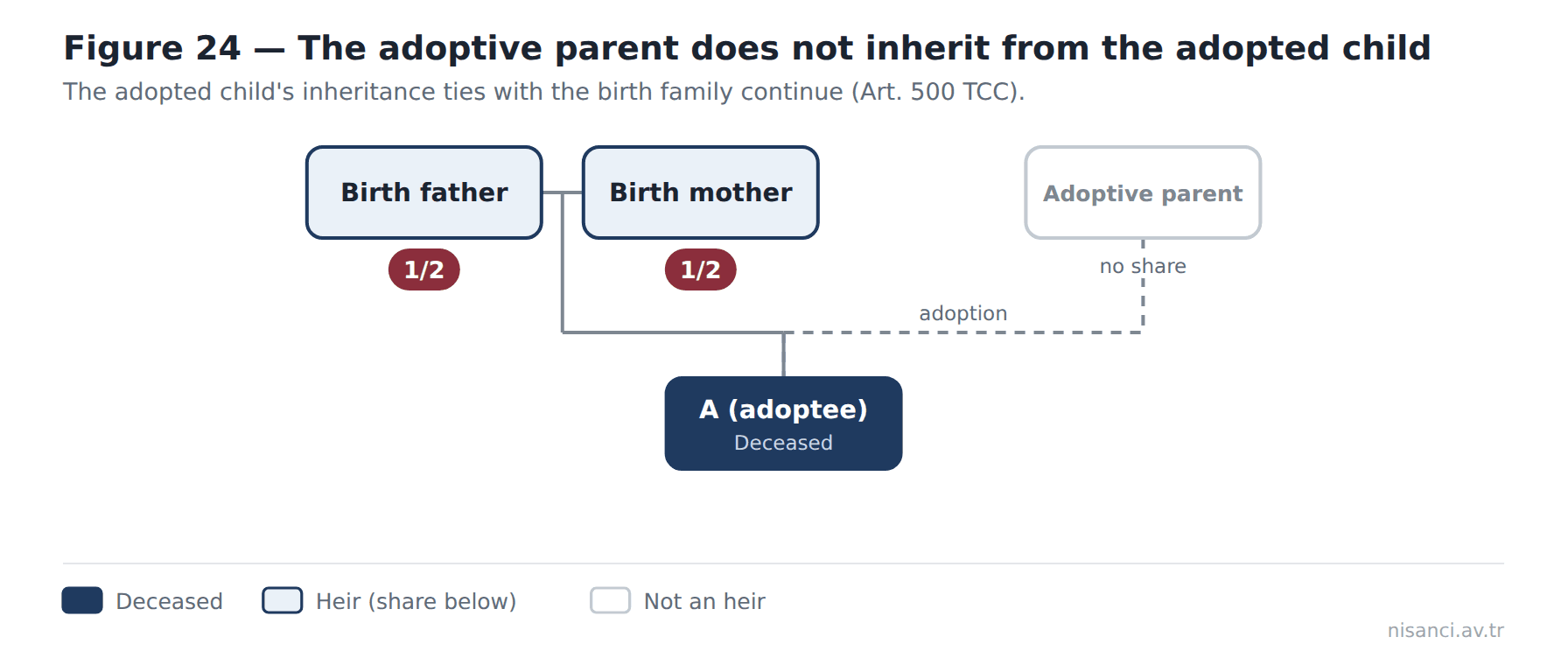
Figure 24 — The adoptive parent does not inherit from the adopted child
VIII. The State as Heir
Art. 501 TCC: "The estate of a person who dies without leaving heirs passes to the State."
Turkish inheritance law does not allow an estate to be left without an owner. Where the deceased leaves no heir in any parentela, no surviving spouse and no adopted child or descendant of an adopted child, the estate passes to the State. In this capacity, the State is the last statutory heir.
Example 24. D was unmarried and had no children. D's parents died before D, and D has no siblings, nephews or nieces, and no heirs in the third parentela. In this case, the whole estate passes to the State.
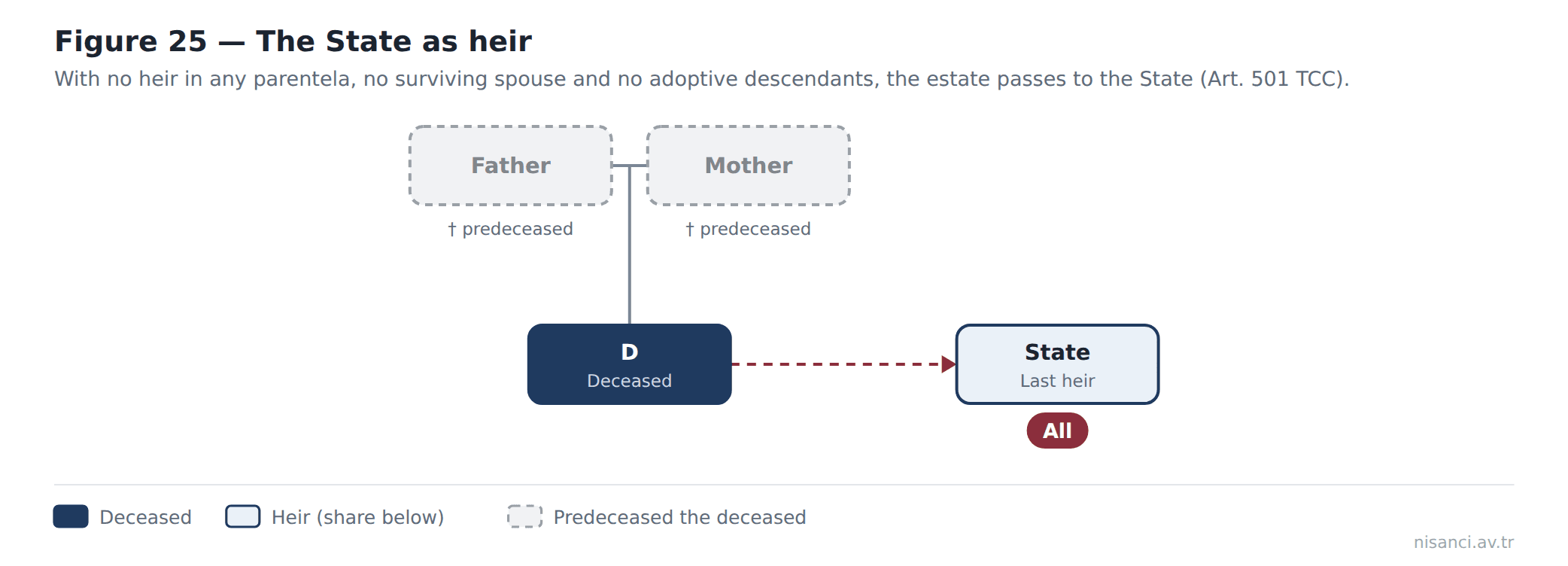
Figure 25 — The State as heir
IX. A Method for Determining Statutory Heirs
Following the sequence below when determining the statutory heirs and their shares in a given case considerably reduces the risk of error:
Establish the date of death and the applicable law. Entitlement to inherit is governed by the provisions in force on the date of death (Art. 17 of Law No. 4722).
Examine the first parentela. If there is a living descendant capable of inheriting, do not move on to later parentelae.
If there is no heir in the first parentela, move to the second; if there is none there either, move to the third.
Divide the estate by stocks and lines, not by the number of persons.
Check each head of a stock. Establish whether each head of a stock died before the deceased, renounced the estate, is unworthy to inherit, waived the inheritance or was disinherited. In each of these cases, pass the share on under the rules of representation.
Set aside the surviving spouse's share first. If there is a spouse, bear in mind that cousins are excluded in the third parentela.
Carry out the liquidation of the matrimonial property regime separately.
Examine any dispositions mortis causa. Check whether there is a will or a contract of inheritance, and whether it infringes the reserved portions.
X. A Brief Note on Reserved Portions
A deceased may alter the statutory shares by a disposition mortis causa. This freedom, however, is limited by the reserved portions (saklı pay, broadly comparable to forced heirship) of certain statutory heirs (Art. 506 TCC):
For descendants, one half of their statutory share
For each parent, one quarter of their statutory share
For the surviving spouse, the whole of their statutory share when inheriting alongside descendants or the parents' parentela, and three quarters in all other cases
The reserved portion of siblings was abolished by Art. 2 of Law No. 5650 of 4 May 2007. Siblings therefore remain statutory heirs, but the deceased may exclude them from the estate entirely by a disposition mortis causa.
Conclusion
The parentela system provides a predictable and coherent framework for determining statutory heirs under Turkish law. The system rests on three core principles:
An earlier parentela excludes every later one
Within a parentela, the estate is divided by stocks and lines
A head of a stock who died before the deceased is replaced by their descendants by way of representation at every degree
The surviving spouse's share depends on the parentela the spouse inherits alongside, and the presence of a spouse limits representation in the third parentela to the children of the grandparents.
In practice, however, the picture is often more complicated than in these examples. The main sources of complexity are half-siblings, paternity established after death, heirs who renounce the estate, successive deaths, heirs who are foreign nationals or live abroad, and the calculation of the matrimonial property liquidation. Establishing the chain of heirs correctly is decisive when obtaining a certificate of inheritance (veraset ilamı), determining the estate or dissolving co-ownership among heirs. It avoids loss of rights and later actions to annul the certificate of inheritance.
References
Turkish Civil Code No. 4721, Arts. 181, 282, 495–501, 506, 575, 578, 580, 611, 612 (in Turkish). https://www.mevzuat.gov.tr/mevzuat?MevzuatNo=4721&MevzuatTur=1&MevzuatTertip=5
Law No. 4722 on the Entry into Force and Application of the Turkish Civil Code, Art. 17 (in Turkish). https://www.mevzuat.gov.tr/mevzuat?MevzuatNo=4722&MevzuatTur=1&MevzuatTertip=5
Law No. 5650, Art. 2 (4 May 2007), repealing Art. 506(3) TCC.
Court of Cassation, 7th Civil Chamber, Docket 2010/1548, Decision 2010/3221, 27.05.2010 (in Turkish). https://mevzuat.adalet.gov.tr/ictihat/1111709700
Court of Cassation, 8th Civil Chamber, Docket 2013/16658, Decision 2014/13055, 20.06.2014 (in Turkish). https://mevzuat.adalet.gov.tr/ictihat/98814400
Court of Cassation, 14th Civil Chamber, Docket 2015/16812, Decision 2016/10451, 15.12.2016 (in Turkish). https://mevzuat.adalet.gov.tr/ictihat/331036400
Court of Cassation, 7th Civil Chamber, Docket 2021/7310, Decision 2022/8168, 29.12.2022 (in Turkish). https://mevzuat.adalet.gov.tr/ictihat/869864900
Court of Cassation, 2nd Civil Chamber, Docket 2024/483, Decision 2024/1228, 27.02.2024, quoting Docket 2022/9263, Decision 2023/985 (in Turkish). https://mevzuat.adalet.gov.tr/ictihat/1039970700
Disclamer
Who inherits in Turkey if there is no will?
Without a will, the estate is divided under the parentela system of the Turkish Civil Code. The deceased's descendants (children, grandchildren) inherit first. If there are none, the parents and their descendants (siblings, nephews and nieces) inherit; failing them, the grandparents and their descendants. A surviving spouse inherits alongside every parentela. If there are no heirs at all, the estate passes to the State (Arts. 495–501 TCC).
How much does a surviving spouse inherit under Turkish law?
The spouse's share depends on which relatives the spouse inherits alongside. With children, the spouse takes 1/4 of the estate; with the parents' parentela, 1/2; with the grandparents and their children, 3/4. If none of these relatives exist, the spouse takes the whole estate (Art. 499 TCC). When a married person dies, the matrimonial property regime is liquidated before the estate is divided, so the spouse usually receives more in total than these proportions alone.
What happens to the share of a child who died before the deceased?
The share is not lost: it passes to that child's own children, i.e. the deceased's grandchildren (Art. 495(3) TCC). The estate is divided per stirpes (by stock), not per capita. For example, if one of two children died first leaving two children, the surviving child takes 1/2 and each grandchild takes 1/4. The share of a child who renounces the estate passes to that child's descendants in the same way, as if the child had not been alive when the succession opened (Art. 611 TCC).
Do half-siblings and step-siblings inherit in Turkey?
A half-sibling who shares one parent with the deceased can inherit, but only from the line of the shared parent. A full sibling takes from both the maternal and the paternal lines. For example, if both parents have died and the deceased leaves one full sibling and one maternal half-sibling, the full sibling takes 3/4 and the half-sibling 1/4. A step-sibling with no blood tie to the deceased (such as a step-parent's child from a previous marriage) is not a statutory heir.
Can cousins inherit under Turkish law?
Cousins belong to the third parentela. They can inherit only where there are no heirs in the first and second parentelae, and the grandparents and the uncles and aunts have all died before the deceased. However, if the deceased leaves a surviving spouse, cousins cannot inherit in any case, and the share that would have gone to them passes to the spouse (Arts. 497(5) and 499(3) TCC; Court of Cassation, 7th Civil Chamber, Decision 2010/3221).
More Insights

Sep 21, 2026
Deemed Renunciation of Inheritance in Turkey | Article 605 TMK
Does an insolvent estate automatically protect heirs in Turkey? We examine the conditions for deemed renunciation of inheritance under Article 605/2 of the Turkish Civil Code, the burden of proof, and the relevant Court of Cassation rulings.

Sep 16, 2026
What Law Applies to Your Inheritance in Turkey? Forced Heirship for Foreign Nationals
If you own property in Turkey, or stand to inherit from a Turkish national, you may be wondering which country's inheritance law actually applies. Here's what Turkish private international law and the forced heirship rules say.

Sep 12, 2026
What Happens If the Lease Has No Rent Increase Clause?
No rent increase clause in your lease? We examine, in light of current Court of Cassation decisions, at what rate and through what procedure a rent increase can be claimed under Articles 343-346 of the Turkish Code of Obligations.