Residence Permit for Victims of Human Trafficking
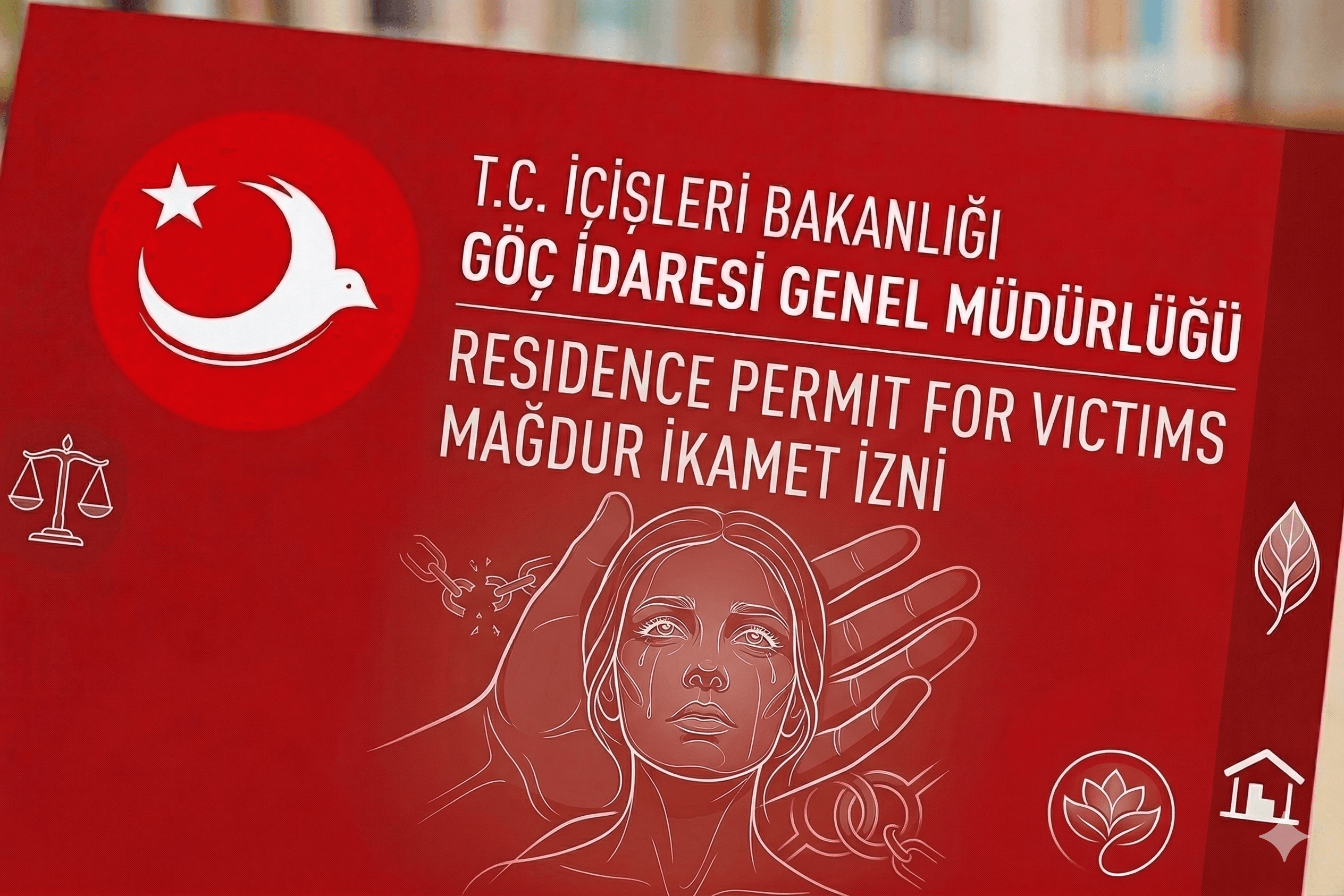
The residence permit for victims of human trafficking is governed by Articles 48 and 49 of the Law on Foreigners and International Protection (Law No. 6458). The procedural rules and implementation principles are further elaborated in Articles 45 and 46 of the Regulation on the Implementation of the same Law.
What Is the Residence Permit for Victims of Human Trafficking?
The residence permit for victims of human trafficking occupies a uniquely protective position within Turkey's residence permit framework. Operating independently of standard eligibility conditions, it is a legal safeguard granted to foreign nationals who are victims of human trafficking — or in respect of whom there is strong suspicion that they may be — providing them with the time and space to recover from their ordeal and make informed decisions about their next steps.
Article 48(1) of the Law defines this permit as follows:
"Foreign nationals who are suspected on strong grounds of being or potentially being victims of human trafficking shall be granted a thirty-day residence permit by the governorates, in order to enable them to recover from the effects of their experience and to decide whether to cooperate with the authorities."
Key Features of the Permit
No Standard Eligibility Conditions Apply
Article 48(2) of the Law makes the fundamental distinction between this permit and all other residence permit types explicit:
"The conditions required for other residence permits shall not be sought in respect of this residence permit."
Ordinary requirements such as proof of income, health insurance, address registration, or prior residence permit history are entirely inapplicable. The permit is issued solely on the basis of a strong suspicion of human trafficking victimhood.
Initial Thirty-Day Duration
The permit is initially issued for a period of thirty days. This period constitutes a recovery and reflection period — designed to give the victim time to come to terms with their experience and to decide, free from pressure, whether to cooperate with the competent authorities. The brevity of the initial period is directly linked to the purpose of the permit: to provide immediate protection and breathing space without forcing the victim into any decision before they are ready.
Extension: Conditions and Maximum Duration
Article 49(1) of the Law governs the renewal of the permit in the following terms:
"The residence permit granted for the purpose of allowing a recovery and reflection period may be extended in increments of up to six months at a time, on grounds of the victim's safety, health, or personal situation. However, these periods may under no circumstances exceed a total of three years."
Extension decisions are therefore based on a holistic assessment of the victim's security situation, physical and psychological health, and individual circumstances. Extensions are granted in six-month increments, and the total duration of the permit may never exceed three years under any circumstances.
Cancellation
Article 49(2) of the Law sets out the ground for cancellation of the permit:
"Where it is established that foreign nationals who are suspected on strong grounds of being or potentially being victims of human trafficking have, on their own initiative, re-established contact with the perpetrators of the offence, their residence permits shall be cancelled."
However, the Law provides a critical safeguard at this point: where the victim re-establishes contact with the perpetrators not of their own free will — but as a result of coercion, intimidation, violence, or threats — the residence permit shall not be cancelled. This provision ensures that victims who are compelled to act under duress are not stripped of their legal protection as a consequence.
In addition to the above, the permit may also be cancelled in the following circumstances:
Failure to comply with the obligations imposed on the permit holder
Establishment of the fact that the foreign national is not a victim of human trafficking
The Legal Character of This Permit
The residence permit for victims of human trafficking is far more than a mere administrative document — it is a direct expression of international human rights law. Turkey's obligations under the Council of Europe Convention on Action against Trafficking in Human Beings, among other relevant international instruments, require states to provide victims with a recovery and reflection period. Articles 48 and 49 of Law No. 6458 represent the transposition of these international obligations into domestic law.
Conclusion
The residence permit for victims of human trafficking is a vital legal protection instrument for foreign nationals found in Turkey under extremely vulnerable circumstances. Its independence from standard eligibility conditions, its initial short-term structure, and its extension mechanism are all designed with a single overarching purpose: to ensure that the victim is first made safe, then given the time to make an informed decision, and finally supported in cooperating with the authorities if they choose to do so.
Anyone who may be a victim of human trafficking, or who encounters a person in such a situation, is strongly urged to seek qualified legal assistance without delay in order to ensure that all available rights and protections are fully exercised.
Disclamer
The copyright for all articles, content, and visuals published on our website belongs to NISANCI | Attorneys at Law. Pursuant to Intellectual and Artistic Works Law No. 5846, it is strictly prohibited to copy, reproduce, summarize, publish the contents on another platform, or use them for commercial purposes without written consent. In case of unauthorized use, legal and penal actions will be initiated against the relevant parties. For written permission requests, please contact our firm's official communication address. All contents on our site are for general legal information purposes and do not constitute legal advice or attorney services. Since the circumstances of every legal case are unique, our firm cannot be held liable for any damages that may arise from taking action based on this information. We advise seeking case-specific professional legal support before proceeding with legal actions. Attorney colleagues, however, are free to use the article contents in their petitions, legal opinions, and academic studies to contribute to their professional work, provided that the source is clearly cited (by providing a link to our website).
Learn more…
Contact for Legal Assistance in Antalya
You can use the form below to ask a question, describe your legal situation, or request an initial consultation. All messages are reviewed with attention and confidentiality. You will receive a response directly from an experienced attorney.